A double-breasted suit demonstrates an understanding of dress codes and a certain rigour in one’s approach to clothing. Wearing a double-breasted suit implies an understanding of its meaning, its history and its proportions. It reveals a desire to control one’s image rather than be at its mercy.
Yet the double-breasted suit divides opinion. For some, it immediately evokes a vintage look, or even the ‘has-been’ – that ‘dusty’ image of the 1970s, 1980s and 1990s, with padded shoulders and aggressive ‘power dressing’. For others, by contrast, it embodies a return to basics, a reconnection with a golden age of masculine elegance when clothes had character.
Somewhere between nostalgia and modernity, between homage and reinterpretation, it offers a unique canvas for stylistic expression to those who know how to make it their own.
The question, therefore, is not whether the double-breasted suit is ‘out of fashion’ or ‘on-trend’; these categories do not apply to it. The real question is: how can it be worn today so that it transcends the period suit and becomes part of contemporary elegance?
The double-breasted suit: the quintessential statement piece
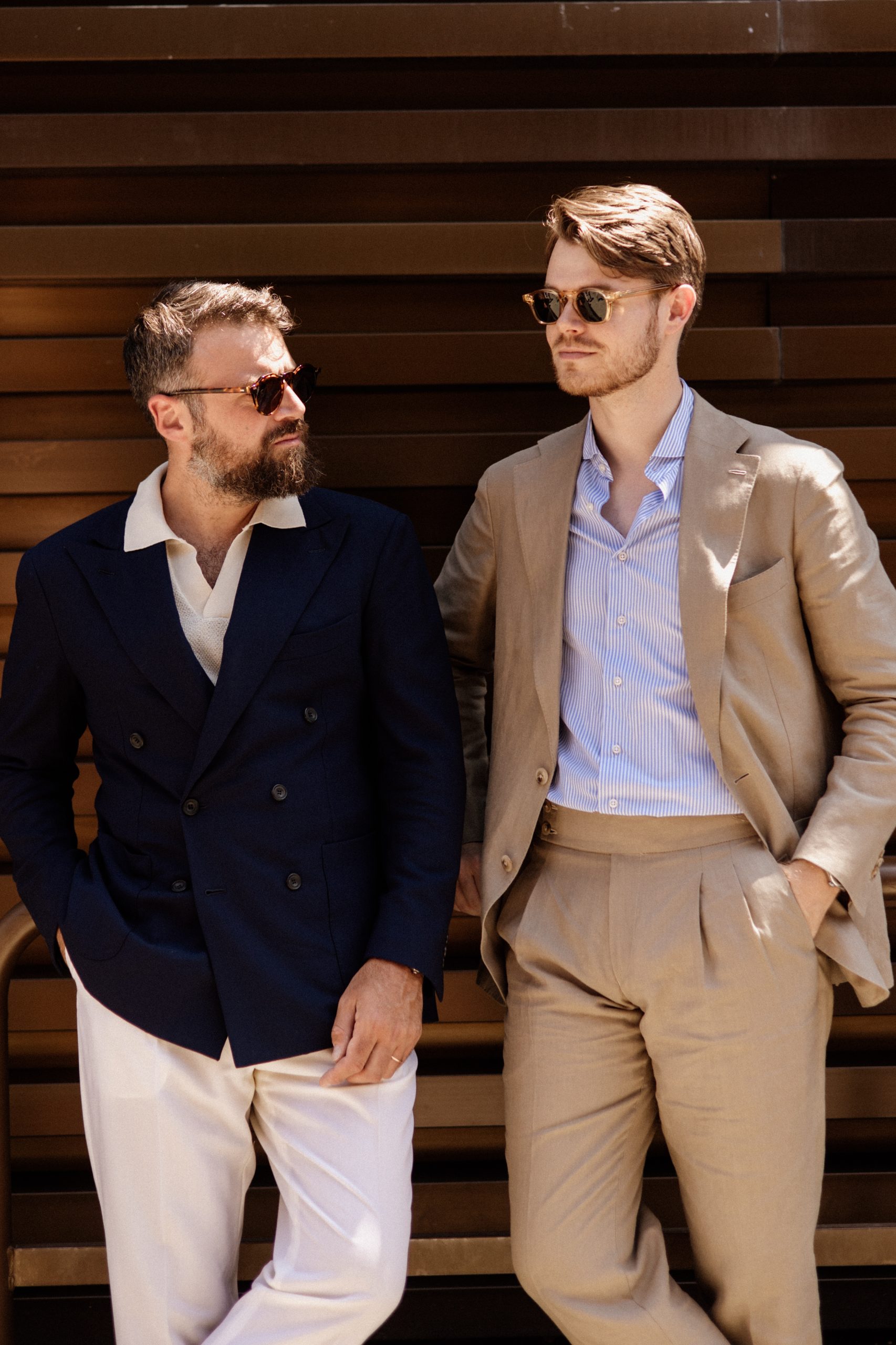
If one were to define what fundamentally distinguishes a double-breasted suit from a single-breasted one, it would be this: the double-breasted suit is a statement piece.
An Immediate Presence
Unlike the single-breasted suit, which can be understated, taking a back seat to striking accessories or a bold shirt, the double-breasted suit commands the visual space, whether the jacket is worn buttoned up or open. It is this characteristic that is both its strength and its challenge.
The Reversed Visual Hierarchy
In a classic outfit centred around a single-breasted suit, the visual hierarchy often follows this order: shirt, tie, pocket square, then jacket. The suit acts as a frame, an elegant structure that showcases the details.
With a double-breasted jacket, the hierarchy is completely reversed. It is the jacket that dominates, catching the eye first. Accessories take a back seat, not because they are less important, but because the impact of the double-breasted jacket absorbs them into an overall harmony.
This is why combinations with a double-breasted suit must be approached differently. A plain white or sky-blue shirt, a understated silk or woollen knit tie, and a tone-on-tone pocket square rather than a contrasting one. The restraint in the details amplifies the impact of the main piece. In a way, it is about granting it the exclusive right to take centre stage.
Choosing the buttoning style: A question of era and identity
Whatever buttoning style you choose, one thing remains certain: each ‘configuration’ tells a different story and evokes a particular era and aesthetic.
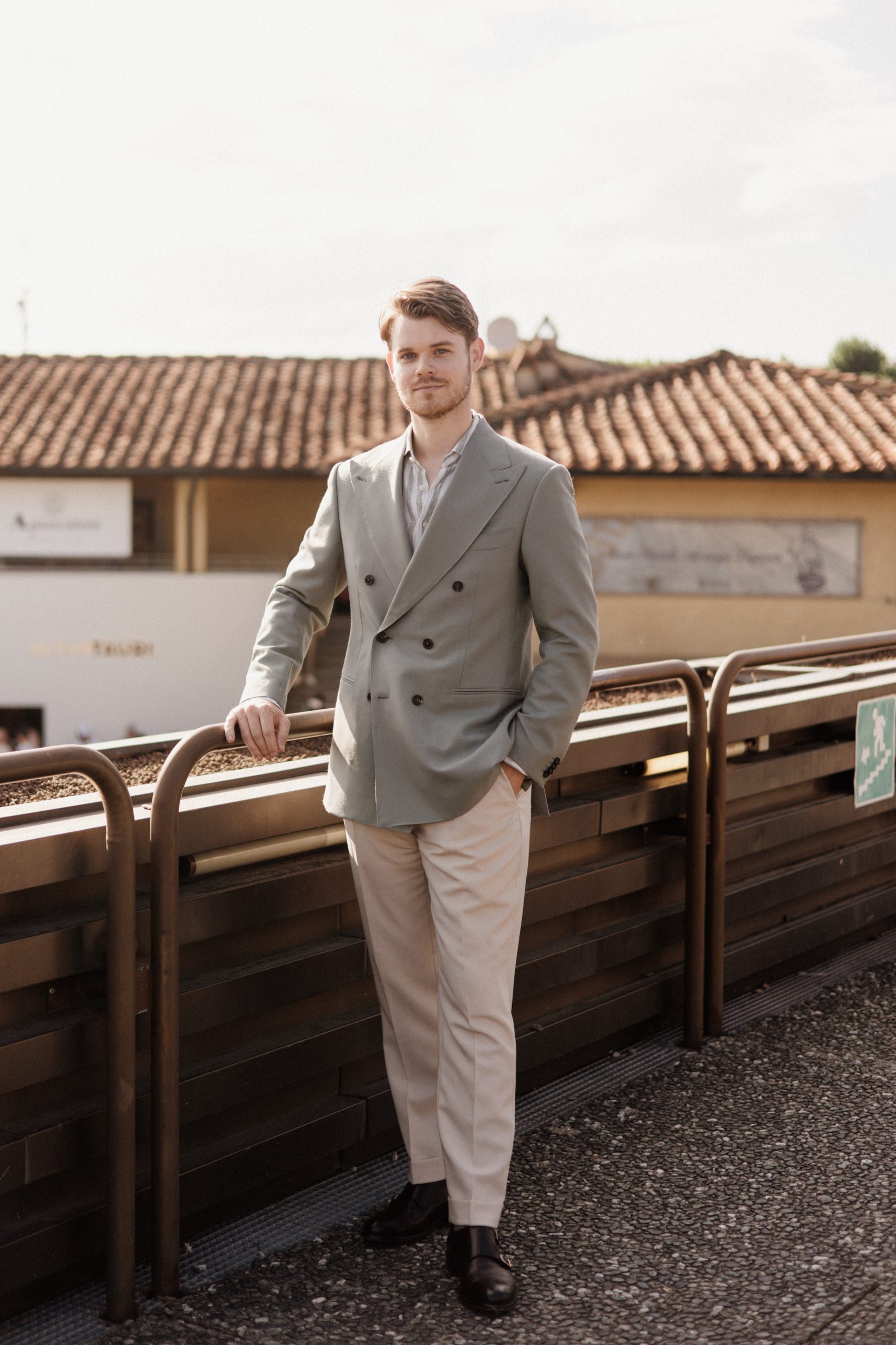
The 6×2: The Edwardian and British Legacy
The 6×2 buttoning (six visible buttons, two functional buttons) is the oldest and most formal configuration, but above all the most sought-after. It has its origins in the 1910s and 1920s, a period when the double-breasted suit definitively left the military sphere to enter the wardrobes of the British aristocracy.
This buttoning style immediately evokes ‘Savile Row, London’s clubs and Edwardian elegance’. The two functional buttons, positioned at waist height, create a low fastening point that powerfully defines the silhouette. It is the double-breasted suit in its most architectural form.
It remains the preferred choice for traditional professional settings and formal occasions.
The 6×1: Neapolitan sprezzatura
The 6×1 buttoning (six visible buttons, a single functional button) is an Italian invention – more specifically, a Neapolitan one – which emerged in the 1930s–1950s. It represents a radically different approach to the double-breasted jacket in terms of style.
The single button, positioned lower down than on a 6×2, creates a line that slims the silhouette. This lends a more fluid look and allows for greater freedom of movement.
The 6×1 evokes Naples, Rome and the Italian Riviera. It conjures up a more Mediterranean, less rigid elegance, which embraces the open-collared shirt and moccasins worn without socks in summer. It is a double-breasted style that embraces a relaxed attitude without losing its nobility. Sprezzatura in all its splendour!
Historically, it was popularised by Neapolitan tailors who sought to lighten the British construction, making it better suited to the climate and temperament of the South. Contrary to what one might think. Today, it embodies the modernity of the double-breasted suit, a statement piece that lends itself to being worn in a less conventional way.
The 4×2: The Anglo-Italian Compromise
The 4×2 buttoning (four visible buttons, two functional buttons) represents a form of middle ground between the two schools of thought.
With just four buttons, the jacket looks less cluttered and less imposing. It’s a style particularly suited to those who find the 6×2 too bulky.
The 4×2 evokes an elegance reminiscent of the 1960s and 70s, that of the films of the French New Wave. Less commonly used today than its six-button counterparts, it remains an interesting option for those seeking a balance between presence and lightness.
At Blandin & Delloye, we mainly offer the 6×2 and 6×1 configurations as they represent the two main families of double-breasted suits at present. The 4×2 and 4×1 configurations remain available on request, but they occupy a more marginal place in the history of the double-breasted suit.
Beyond the rules: the open double-breasted jacket – transgression or carelessness?
Wearing an open double-breasted jacket provokes an immediate reaction amongst those familiar with the dress codes. For some purists, it is a breach of the rules, even a negation of what a double-breasted jacket is. For others, it is a sign of self-assured nonchalance, or even a certain modernity.
The impression it gives depends entirely on how it is worn.
A double-breasted jacket left open by accident – perhaps because you’ve just got up from the table or aren’t familiar with the rules – gives the impression of carelessness. The natural instinct would be to do it up.
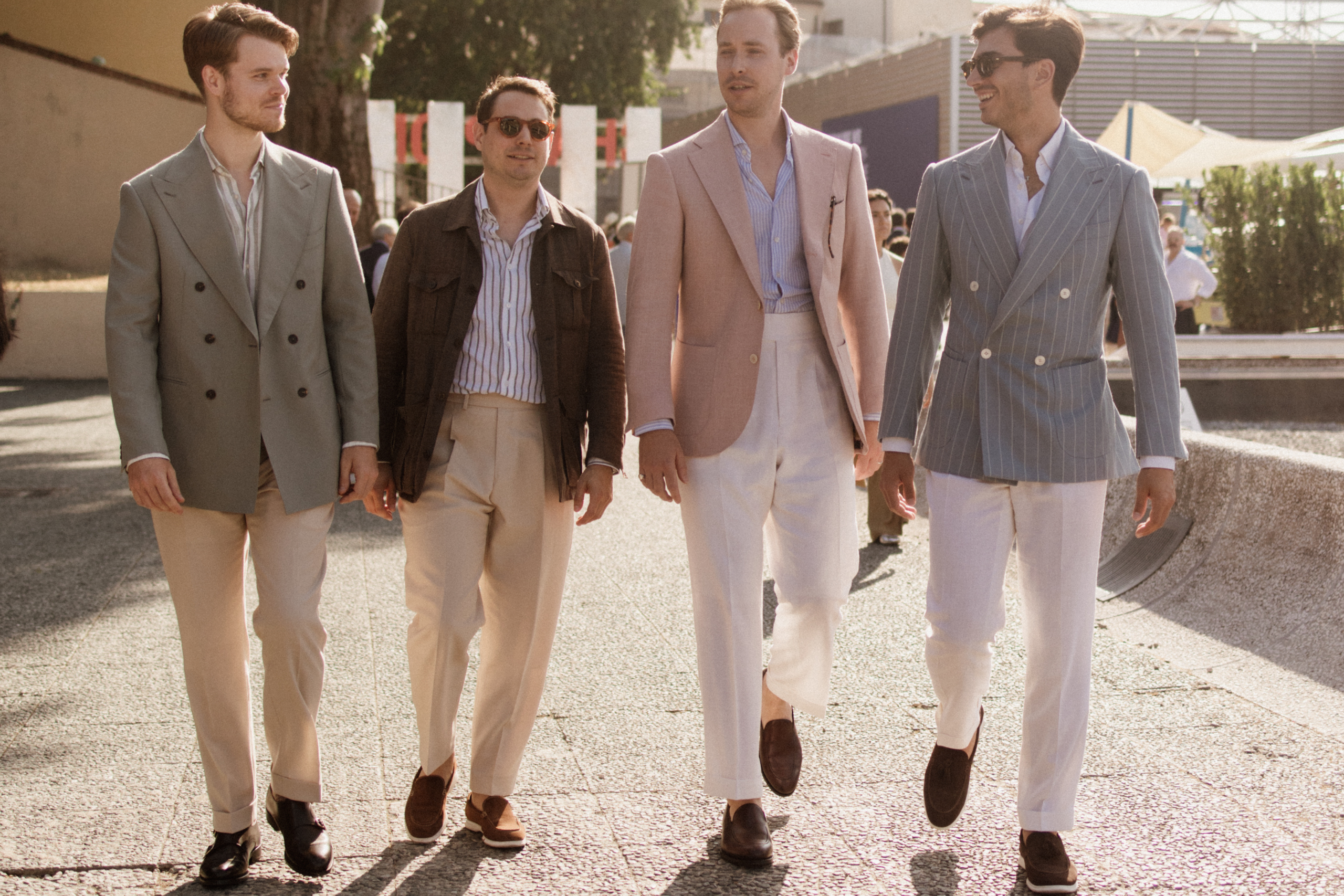
On the other hand, a double-breasted jacket worn deliberately open, with a confident posture and an overall put-together look, can convey an image of self-assured nonchalance. It is the image of the dandy who knows the rules perfectly well but chooses not to follow them all. A form of sprezzatura taken to its extreme.
But why does this rule exist?
The recommendation to keep a double-breasted jacket buttoned up is not merely a matter of arbitrary etiquette; it is simply a matter of structural logic.
A double-breasted suit is designed around the way its panels overlap. Its entire cut, the arrangement of its buttons, the shape of its lapels – everything is based on the principle that the jacket will be worn buttoned up. Tailors construct the drape taking this constant tension into account.
When you unbutton a double-breasted jacket, several things happen. The lapels lose their structure; they are no longer held against the torso and start to splay out. The waistline disappears; the closing point that defines the silhouette is no longer there, and this creates a visual imbalance.
It’s like wearing a shirt with half the buttons undone – technically possible, but rarely elegant.
The open double-breasted jacket: When and how?
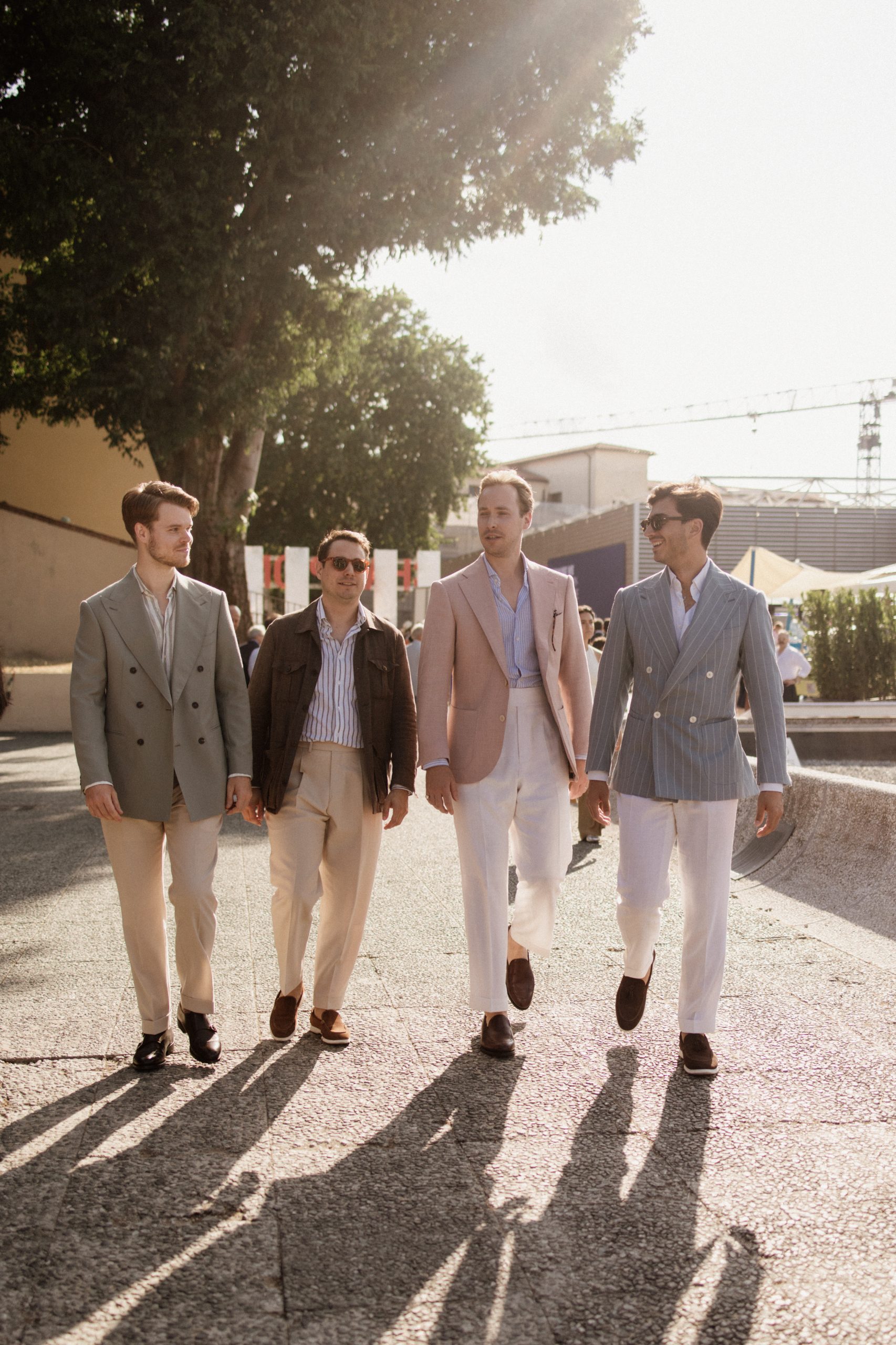
There are times when wearing an open double-breasted jacket can make sense. In a very casual setting, a tweed double-breasted jacket worn open over a roll-neck jumper and jeans, on a Sunday stroll, can exude a certain chic nonchalance. You’re clearly not aiming for a formal look; the intention is clear.
Or, in sweltering heat, when the temperature soars and keeping the jacket buttoned up becomes downright uncomfortable, unbuttoning it temporarily is simply common sense. Better an open double-breasted jacket than a sweaty face and a soaked shirt.
The key is that it looks deliberate, not accidental. Your posture, your gait, your general demeanour should say: ‘I know what I’m doing; I’ve chosen not to follow this rule.’
You say you wear your double-breasted jacket mostly open because you don’t care about the dress codes. That’s a perfectly defensible stance, provided you’re fully prepared to accept the consequences. If, indeed, there are any these days.
Not caring about the rules doesn’t mean ignoring them out of ignorance. It means knowing them and deliberately choosing not to follow them.
Wearing an open-fronted jacket when you have a perfect command of your wardrobe, when the rest of your outfit is impeccable, and when your overall demeanour exudes confidence – this can become a hallmark of your personality.
It’s the attitude of a jazz musician who has a perfect command of music theory before choosing to play outside the bars. Elegant transgression requires mastery first and foremost.
Elegance through the rules: Why we never fasten the top button
A question often comes up amongst those new to suits: why is the top button of a jacket – whether single-breasted or double-breasted – never fastened?
Its origin: A royal anecdote that became law
The most widely accepted story attributes this rule to King Edward VII of England in the early 20th century. A portly man and a lover of good food, the king is said to have got into the habit of leaving the bottom button of his waistcoat and then his jacket undone for greater comfort after meals. What began as a physiological necessity quickly became a code of elegance.
A Mark of an Understanding of Dress Codes
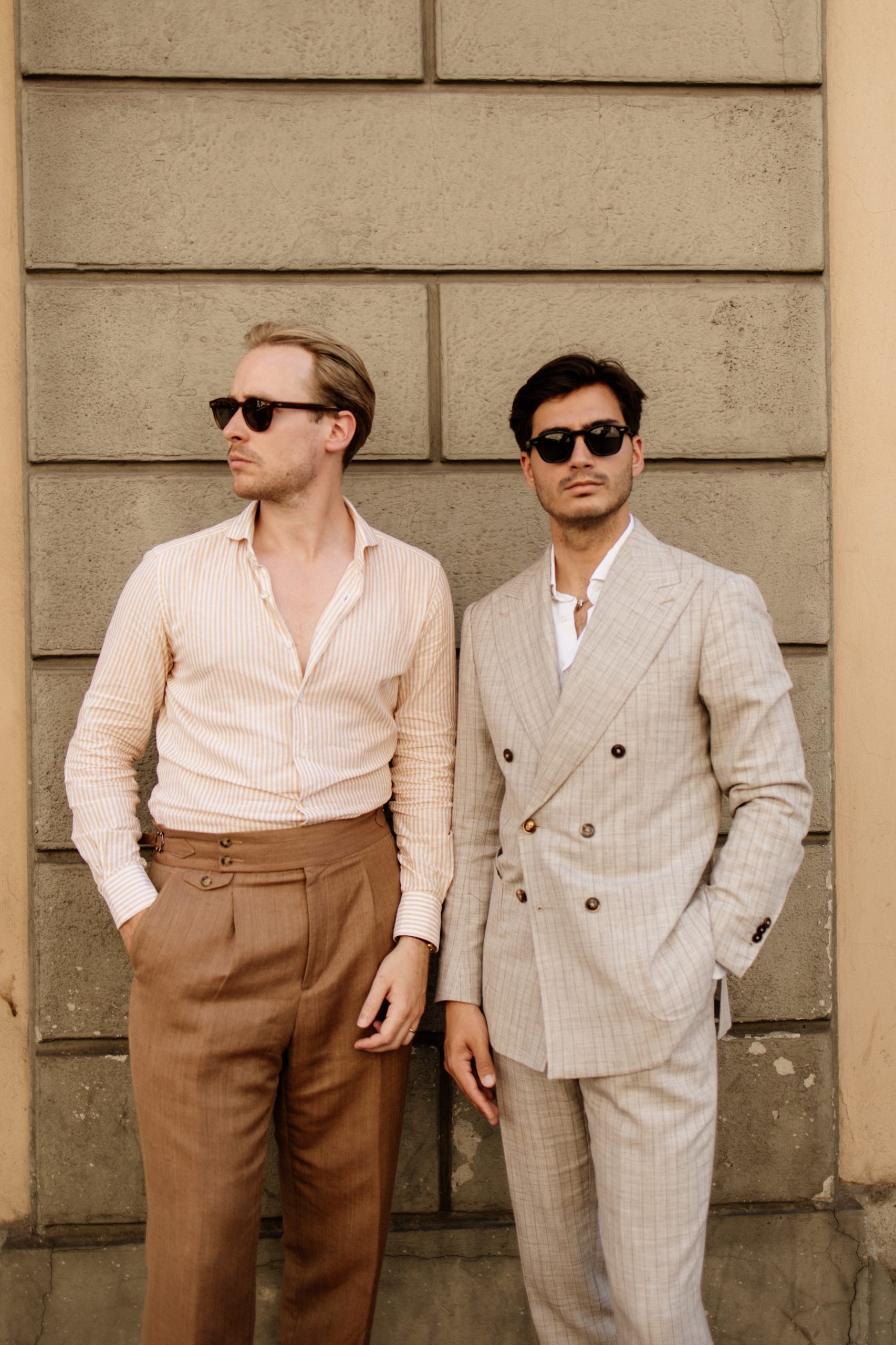
Today, leaving the bottom button of a single-breasted jacket unbuttoned has become a sign of sartorial sophistication. It is one of those subtle details that distinguishes someone who simply wears a suit from someone who has truly mastered it.
Seeing someone wearing a two-button jacket fully fastened, including the top button, immediately reveals a lack of understanding of the codes. It is not a serious mistake, but it is a tell-tale sign. Conversely, this small attention to detail signals a form of respect for sartorial heritage.
The Effect of Style: A Liberating Conclusion
Perhaps this, ultimately, is the lesson of the top button: elegance is often found as much in what one does not do as in what one does. It is in this restraint, this respect for the codes, that allows the garment to fully express its potential.
Author: @romain.pizzanelli
See our full range of suits right here