30/09/2026
The double-breasted suit: a distinctive feature
Wearing a double-breasted suit in 2026 is a deliberate choice. It is neither the obvious option nor the most comfortable…
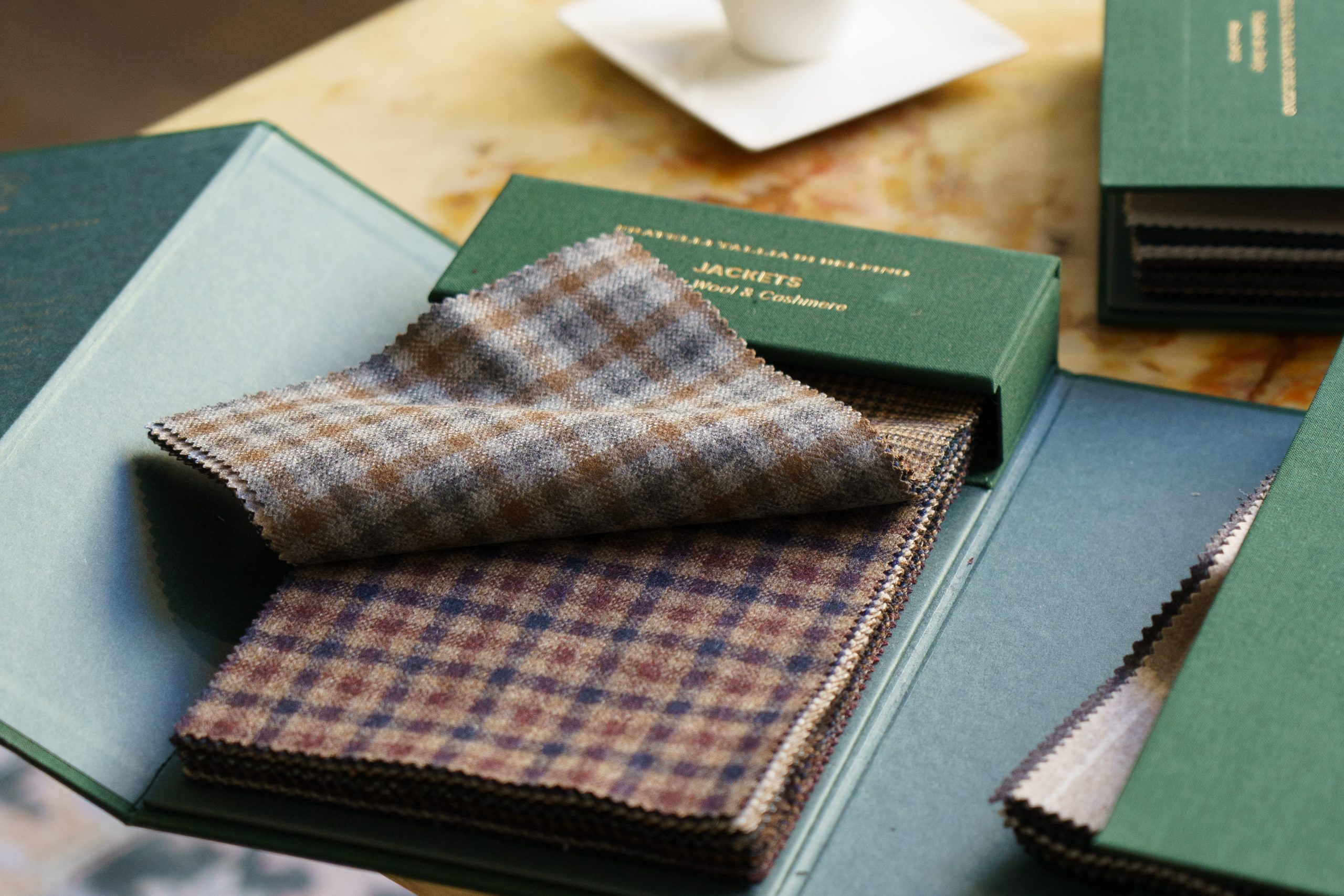
It is these companies that select the fibers, design the fabrics, work on the colors, and develop the finishes that give the fabric its texture, drape, and character. Some have become true benchmarks in the world of men’s fashion, to the point that, at times, their name alone is enough to guarantee a fabric’s quality.
Many of the most prestigious were founded in Biella and its surrounding area, in Piedmont. Located at the foot of the Alps, this region has for centuries benefited from an environment particularly suited to wool processing, thanks in large part to its rivers. As a result, this region has become one of the major cradles of the Italian textile industry.
Below, we present the history of some of the companies that have shaped the reputation of Italian fabrics.
It is difficult to discuss Italian fabrics without starting with Vitale Barberis Canonico. Its history dates back to 1663, the year the first official document attesting to the Barberis Canonico family’s activities in the wool industry was drawn up. This document attests, in particular, to the family’s expertise in processing and dyeing wool.
More than three centuries later, the company remains a family-owned business and continues to produce its fabrics in Biella. This exceptional longevity makes it one of the historic pillars of the global textile industry.
VBC has built its reputation primarily on a wide range of men’s fabrics: formal, classic, and versatile fabrics, as well as more contemporary materials and seasonal fabrics.
For a suit intended for everyday wear, a Super 110 wool, for example, is a particularly versatile choice. As the thread count increases, the fiber becomes finer, and the fabric can be lighter and softer—but also more delicate. Conversely, thicker wools can offer greater durability, a more pronounced texture, and more warmth.
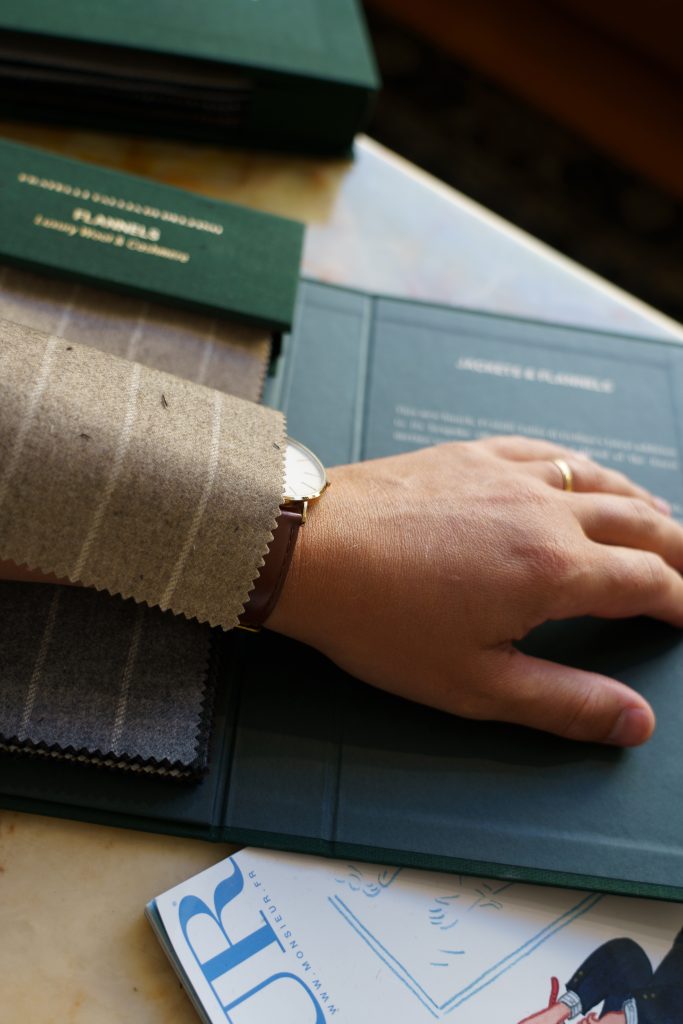
The history of Loro Piana dates back well before the founding of the company as we know it today. The Loro Piana family had been involved in the wool trade since the early 19th century, before Pietro Loro Piana officially founded the company in 1924 in Quarona, Piedmont.
The company gradually built a reputation by working with the finest and most delicate materials. Cashmere, extra-fine merino wool, vicuña… Loro Piana has built its identity around a constant quest for exceptional materials.
Indeed, this is one of the fundamental principles for a textile manufacturer such as Loro Piana: beyond the mere color or pattern of a fabric, it is the entire process of researching the fiber, the yarn, and the treatment of the material that determines the final result.
This philosophy explains why the Loro Piana name now extends far beyond the world of textiles to become a true benchmark in the realm of luxury.
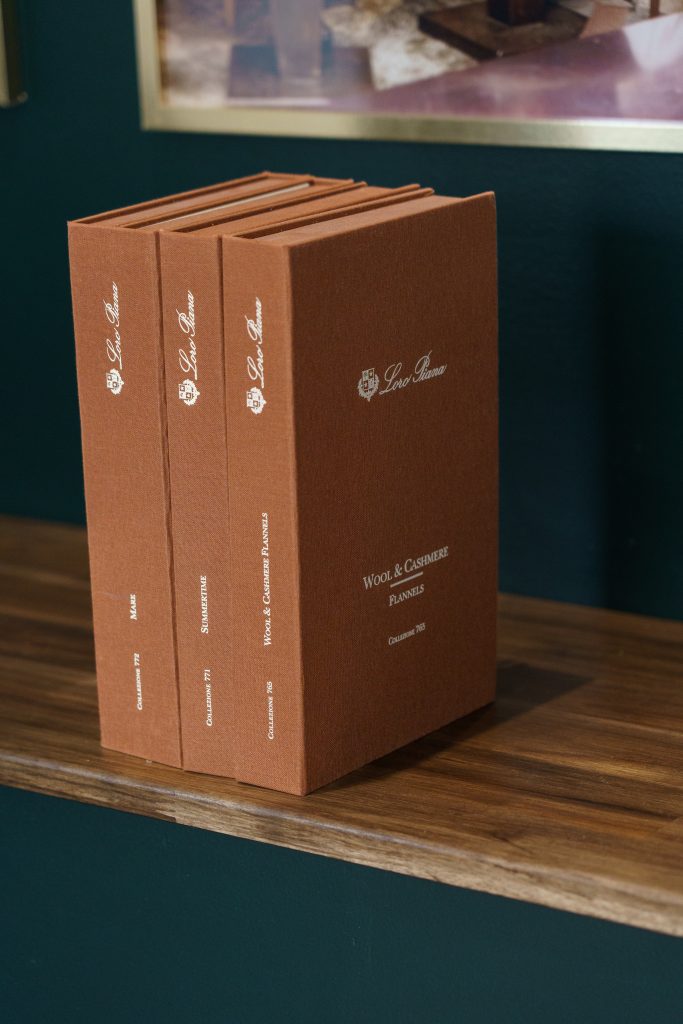
At Cerruti, the story begins in 1881, when Nino Cerruti’s grandfather, Antonio Cerruti, founded a textile company in Biella.
When Nino took the reins of the family business in 1951, at the age of just 20, he gradually led it to new heights. He modernized production and quickly realized that it was no longer enough to simply produce beautiful fabrics—he also had to consider how they would be worn.
That is why, in 1957, he founded Hitman and began producing men’s clothing. This was a decisive step, as Cerruti gradually transitioned from being a fabric merchant to a full-fledged player in the fashion industry.
Ten years later, in 1967, Nino Cerruti opened his boutique on Place de la Madeleine in Paris and launched his own high-end men’s ready-to-wear brand. Thus, Cerruti 1881 was born.
What followed was the evolution of a fashion house that would gradually broaden its horizons: women’s clothing collections, fragrances, and numerous collaborations with the world of cinema. This journey sets Cerruti apart from many other textile houses in Biella: here, fabric becomes the starting point for a true stylistic language.
Reda is another major historic house in Biella. Its history began in 1865, when Carlo Reda transformed a former textile mill in Valle Mosso into a wool spinning mill.
In 1919, the factory passed into the hands of the Botto Poala brothers, whose family itself came from a long tradition of textile manufacturing. This marked the beginning of a new family history that continues to this day.
Since then, Reda has forged an identity marked by a strong focus on innovation. The company maintains solid industrial and artisanal roots, while placing great importance on research and development of new materials.
Its work with merino wool is a prime example: it is no longer simply a matter of reproducing traditional fabrics, but of constantly seeking new performance characteristics, new textures, and new applications.
It is precisely this ability to combine textile tradition with innovation that allows Reda to remain a benchmark in the ever-evolving world of men’s fashion.
Zegna occupies a unique place in this history. Founded in 1910 in Trivero by Ermenegildo Zegna, the company began as a fabric manufacturer with a very clear ambition: to produce fabrics of the highest possible quality.
From the very beginning, Ermenegildo Zegna set out to control the quality of his raw materials by selecting fibers directly in their countries of origin before having them processed in Italy. This approach already foreshadowed the vertical integration strategy that would become one of the group’s key strengths.
Starting in the 1960s, Zegna gradually expanded its operations into the men’s fashion sector. In 1968, the company opened its first factory dedicated to ready-to-wear clothing, before expanding its international network over the following decades.
This evolution would transform Zegna into a true luxury house: the group was no longer content to simply manufacture fabrics for third parties; it now controlled a large part of the supply chain, from raw materials to the finished garment.
This transformation was driven by an international strategy. After opening boutiques in Paris in 1980, Milan in 1985, and Tokyo in 1989, Zegna opened a boutique in Beijing in 1991, becoming one of the first luxury brands to establish a direct presence in China.
Even today, fabrics remain at the heart of Zegna’s business model, but they are only the first step in a much broader supply chain that extends from the fiber to the finished product.
VBC, Loro Piana, Cerruti, Reda, Zegna… These houses share neither the same history, nor exactly the same specialties, nor the same market positioning. They do, however, share a common region and heritage: those of Biella and its exceptional textile tradition.
This is also what makes the profession of fabric merchant so fascinating. When choosing a suit, one does not simply select a color or a pattern. You choose a fiber, a weight, a texture, a fabric, the way it reflects light, and, above all, how the garment will age over time.
The cut gives the suit its silhouette. The fabric gives it its character.
And when you understand the history of these great Italian fashion houses, you realize why choosing a fabric merchant is far from a mere detail.
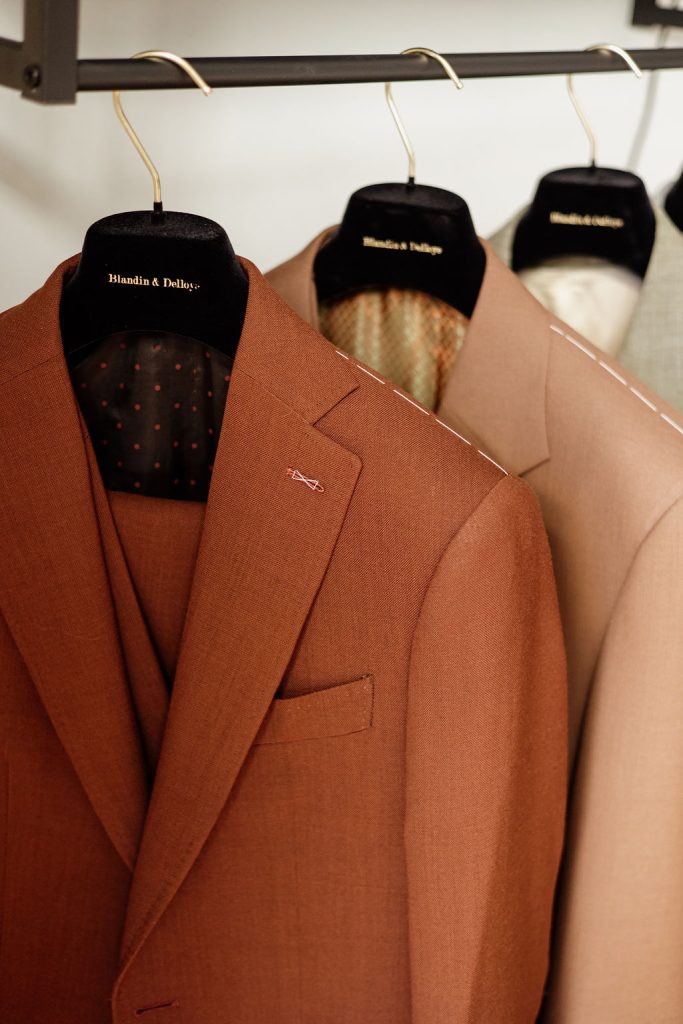
Article written by @yves_dron