
In summary,
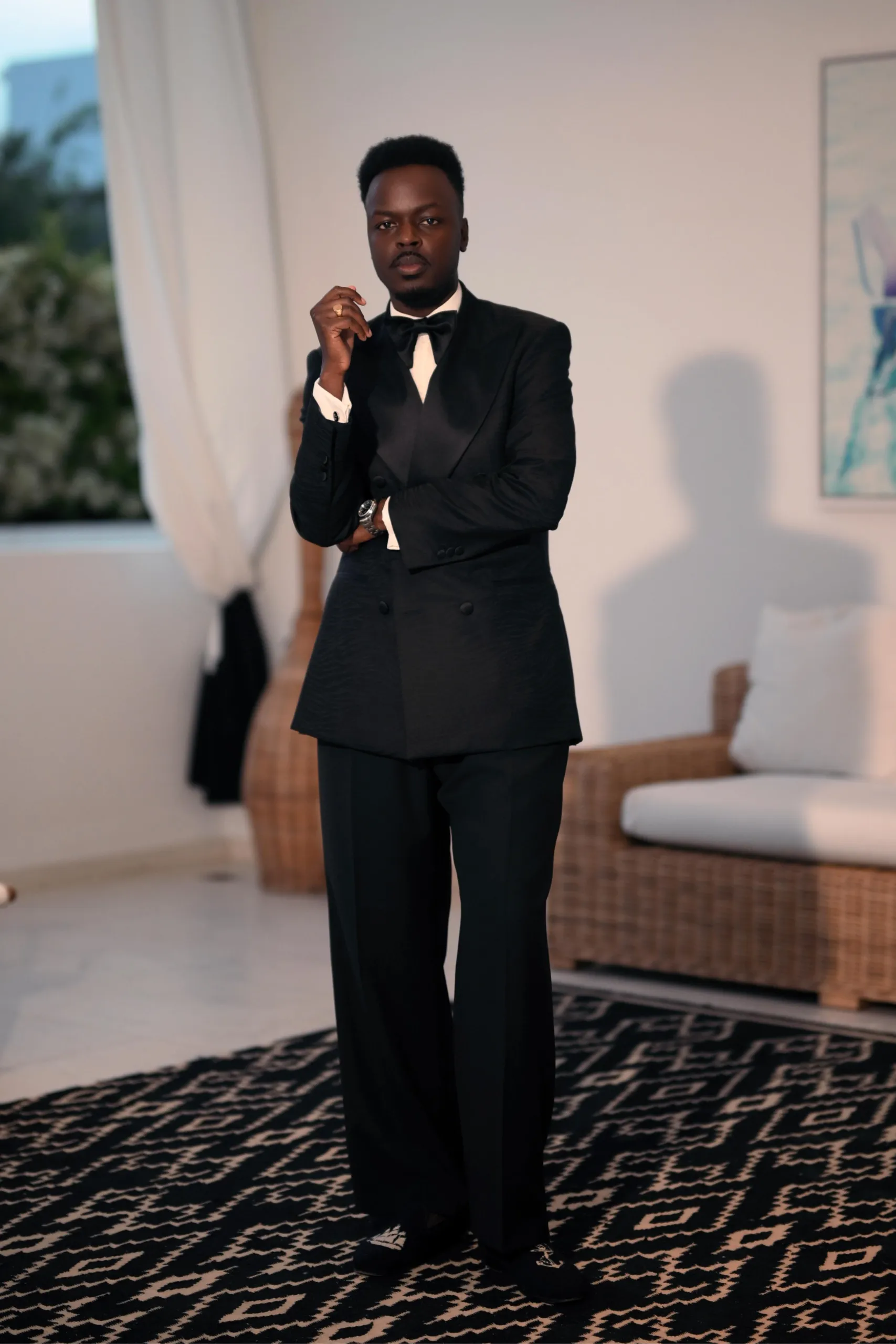
This double-breasted two-piece tuxedo is designed for grand soirées, galas, red-carpet events, and high-society receptions.
The tuxedo as a whole
The Design
The jacket is crafted from a 100% wool black fabric featuring a subtle tone-on-tone zebra pattern. The pants are made from a solid black, 100% wool Barathéa fabric by Dormeuil. With a weight of 315 g/m², this fabric is dense enough to ensure a flawless drape.
The Cut
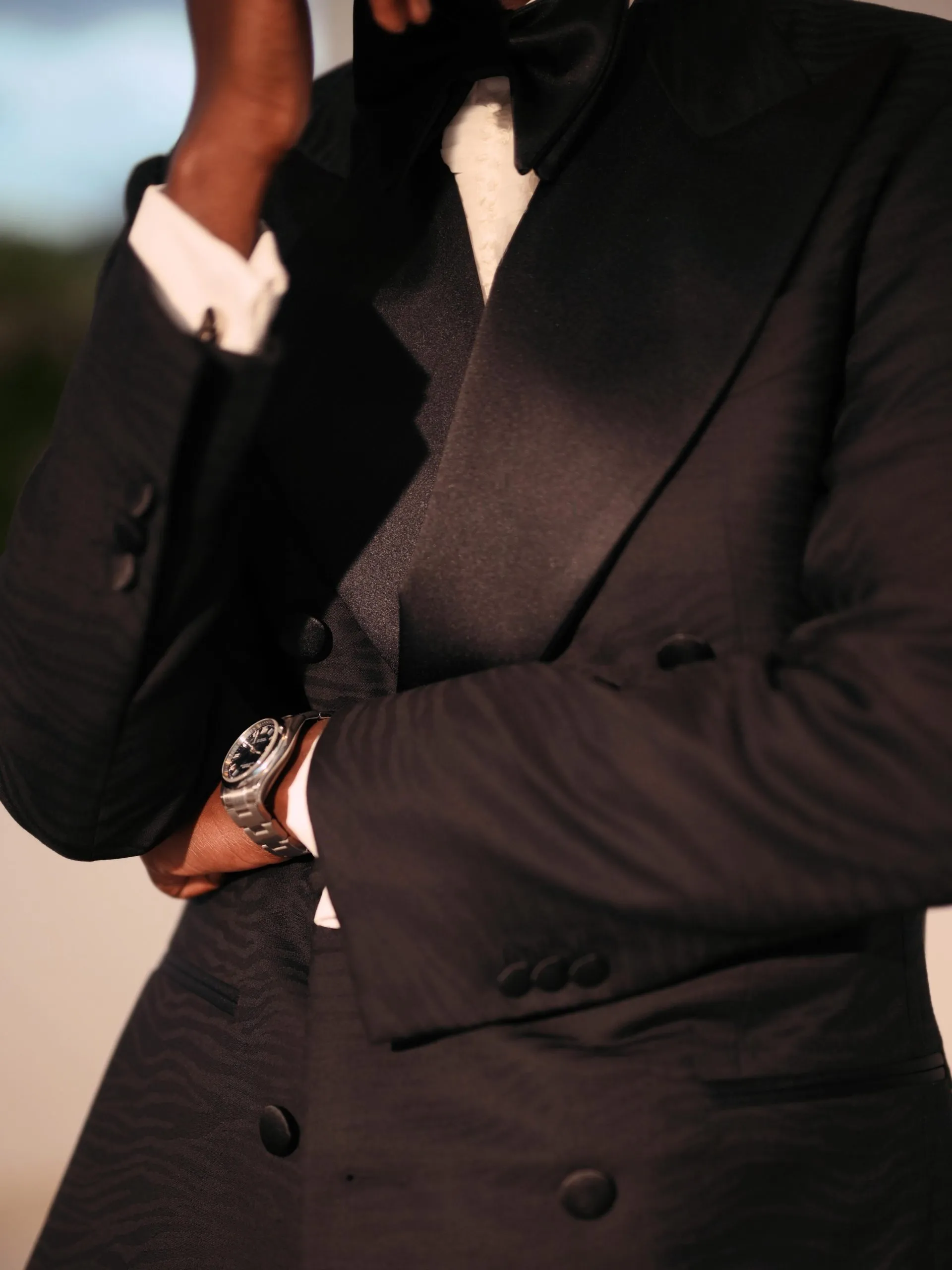
The 6×2 double-breasted style, with six decorative buttons and two functional buttons, is the most formal and striking version of the double-breasted jacket. It creates a wide panel of fabric across the front that visually broadens the shoulders and elongates the torso.
The Color
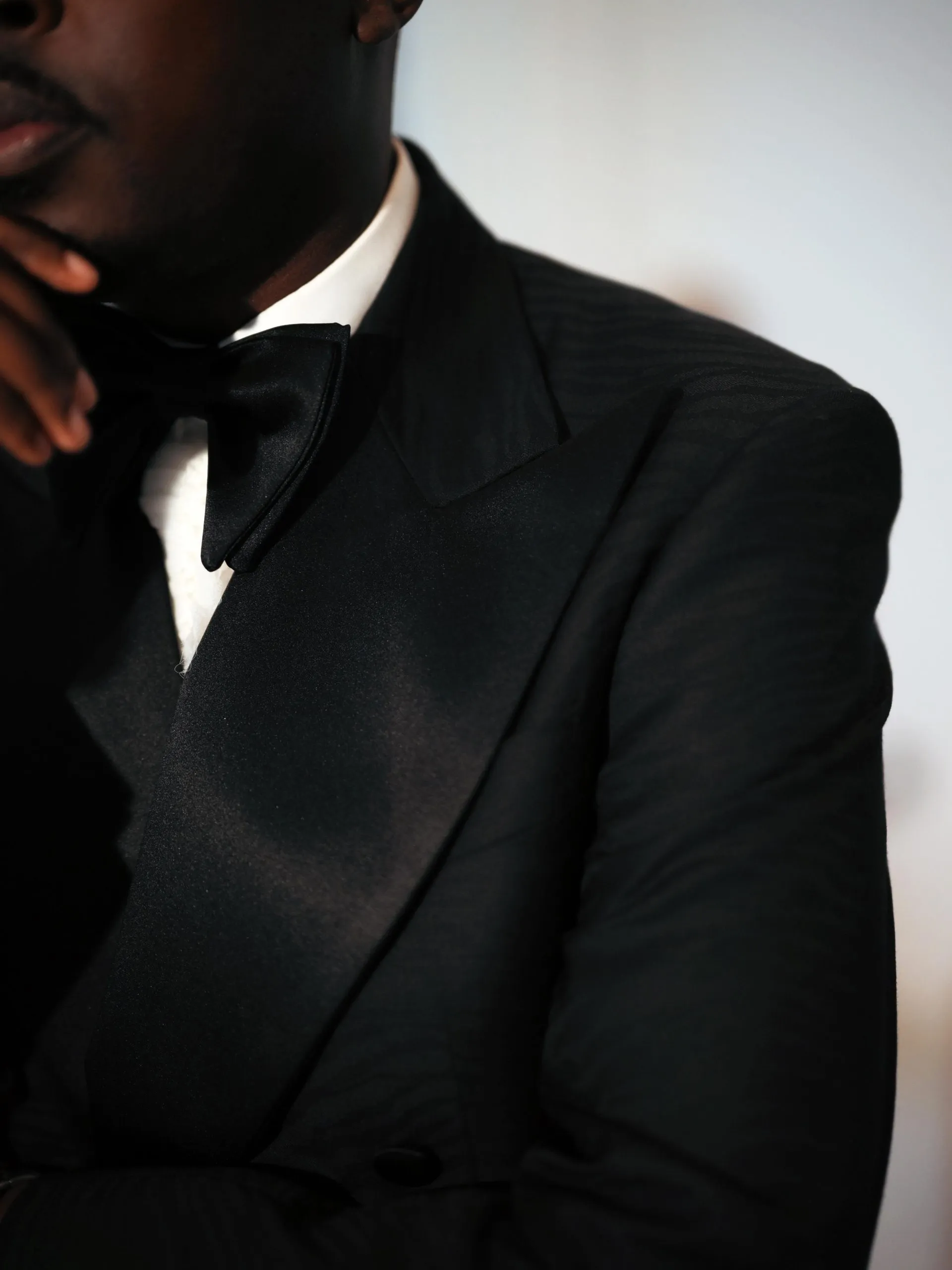
On a double-breasted jacket with wide satin lapels, black creates a particularly striking graphic effect: the two satin lapels form a deep, luminous V-shape on the front, which draws the eye and subtly highlights the contrast with the print of the jacket’s main fabric.
A few details
The Double-Breasted Jacket
Originally, the double-breasted tuxedo was worn by a select few stylish individuals who wanted to stand out from the standard style; it has always been a means of stylistic expression.
The Pants
The loose-fitting pants with two outer pleats—inspired by 1940s couture and reimagined for the contemporary wardrobe—convey a bold and confident look that contrasts with the modern, slim-fit tuxedo.
The belt
The pleated silk belt, known as a “cummerbund, ” is the traditional alternative to the vest in a two-piece tuxedo. Its origins are Anglo-Indian: adopted by British officers in India in the 19th century as a lightweight alternative to the vest in hot climates, it became a staple of Western formal wear by the early 20th century. Here, in black satin, the pleats cover the waistband of the pants and create visual continuity between the jacket and the pants, which is essential when the jacket is worn open.
Want to see more?
Take a close look at every detail of Kevis’s double-breasted two-piece tuxedo, crafted from black Dormeuil barathée.
Style
Style
The contrast between the main fabric—which is more matte and patterned—and the sheen of the satin is the distinctive feature that identifies it as a tuxedo jacket. This effect is particularly striking on a double-breasted jacket with wide lapels.
Business suits
Belt
Belt
A custom-made garment inspired by the original Anglo-Indian two-piece tuxedo, crafted from pleated black satin, which creates a visual continuity with the open-front jacket.
Business suits
The 6x2 cross
The 6x2 cross
This is the most formal double-breasted jacket style. It features six visible buttons, wide satin lapels, and an architectural silhouette.
Business suits
Acknowledgments,
Photographer:@thestoryalist