
14/10/2026
3 stylish wedding guest outfits
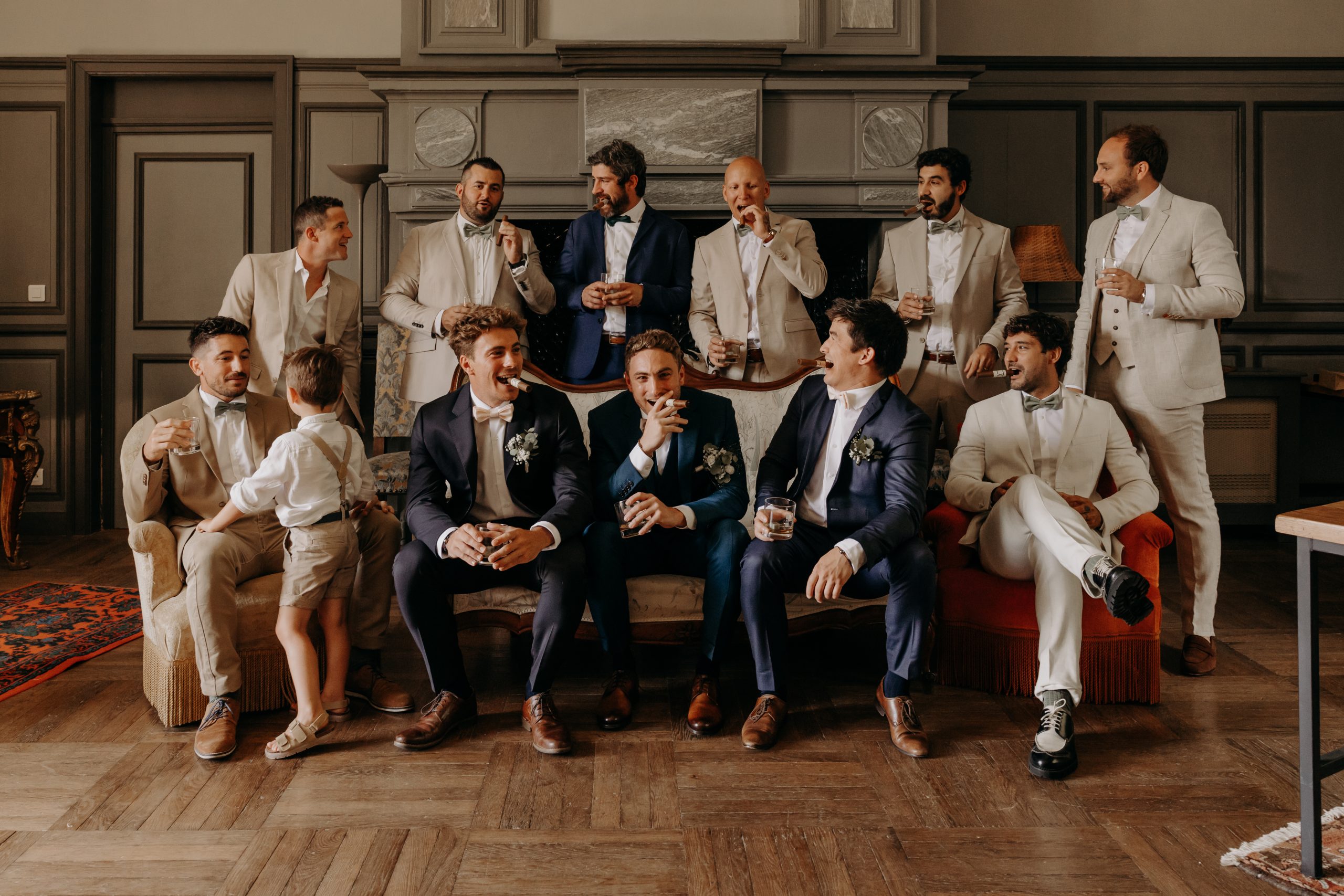
Have you been invited to a wedding and aren’t sure what to wear? No need to worry – Blandin &…
The foundations of the suit as we know it today were laid in the late 19th century. It was , in particular ,Beau Brummell—considered the father of dandyism—who helped establish a new concept of masculine elegance at the English royal court.
At the time, Brummell was a close associate of the Prince of Wales, the future king of the United Kingdom. The prince enjoyed considerable prestige and exerted a genuine influence on fashion during his era. The style of dress championed by Brummell thus gradually spread throughout the Western world before becoming firmly established.
The earliest form of the modern men’s suit consisted of a three-button jacket with small, fitted lapels that stood up quite high, paired with a vest.
At that time, people typically fastened only the top two buttons, which created a vertical line and helped to visually elongate the silhouette.
However, changes in lifestyles would soon lead to modifications in this design. The growth of urban environments and the pollution linked to industrialization, in particular, caused temperatures in cities to rise. The vest, which added an extra layer, became less practical, so men gradually began to do without it.
At the same time, the button placket moved lower on the jacket. This evolution naturally led to the emergence of the two-button suit, which gradually became the norm.
With a lower button placket, the suit better accentuates the torso. Darts were then used to highlight this construction and give the silhouette a V-shape—a feature particularly prized in men’s elegance.
White pants bridge the gap between tailored elegance and casual chic.
And that is precisely why I find them interesting.
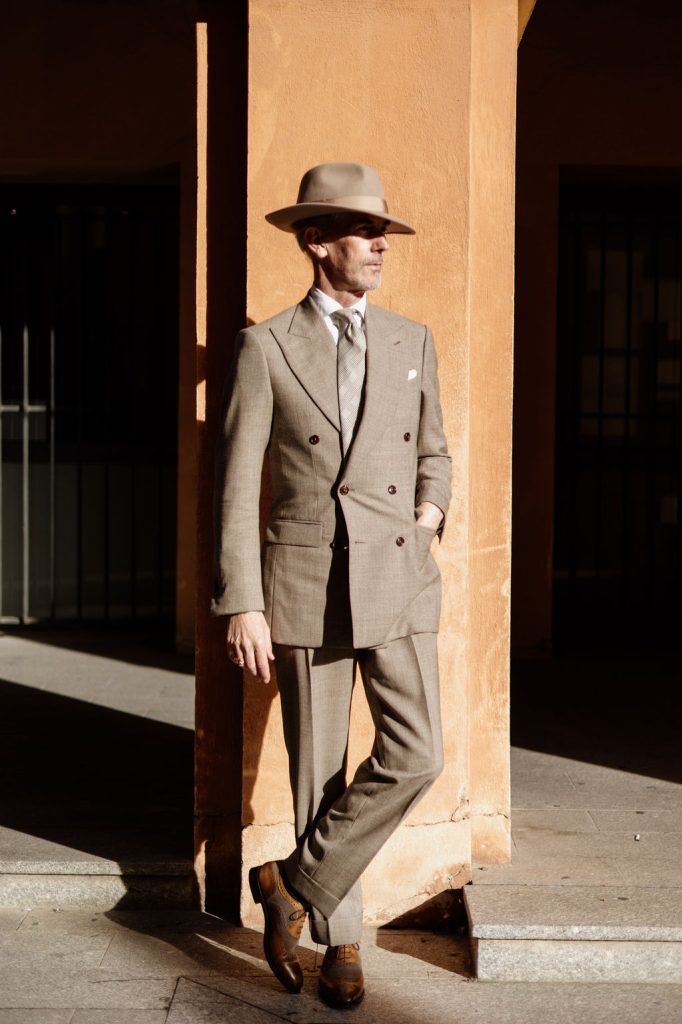
V-shaped lapels would also play an important role in this pursuit of a V-shaped silhouette, especially during the interwar period.
Initially, they were used primarily on single-breasted evening jackets. However, they soon became part of business attire and daytime wear, where their use became increasingly widespread, while still maintaining a high level of formality.
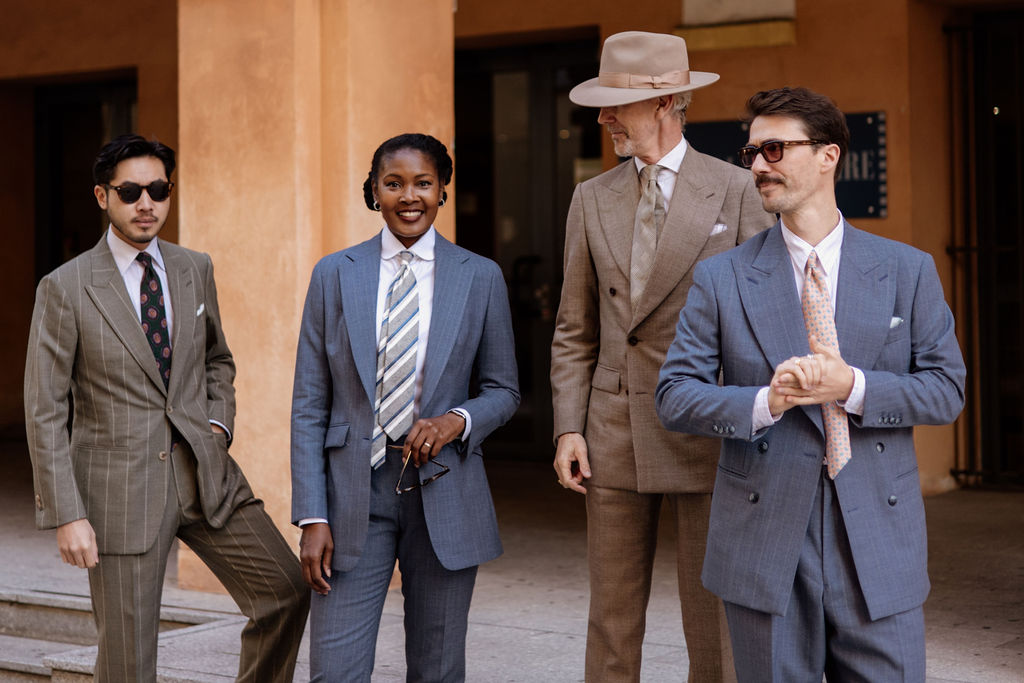
Today, peak lapels can be incorporated into many styles of men’s attire: festive, formal, or business.
They also offer an interesting alternative to the double-breasted suit. A single-breasted jacket with peaked lapels is, in fact, less formal and, above all, easier to wear on a daily basis. Unlike a double-breasted suit, it can be worn unbuttoned and offers a much wider opening in the chest area.
The jacket as we know it today draws its inspiration, in particular, from the uniform worn by mail carriers in England in the 19th century. Its purpose was primarily practical: to provide an extra layer and protect against the cold.
For this reason, it was typically worn in winter, under the suit jacket.
Today, the use of the jacket has become much less common, especially under the influence of mass-market fashion , which favors simple, easy-to-produce designs. As a result, the two-button two-piece suit has become the norm.
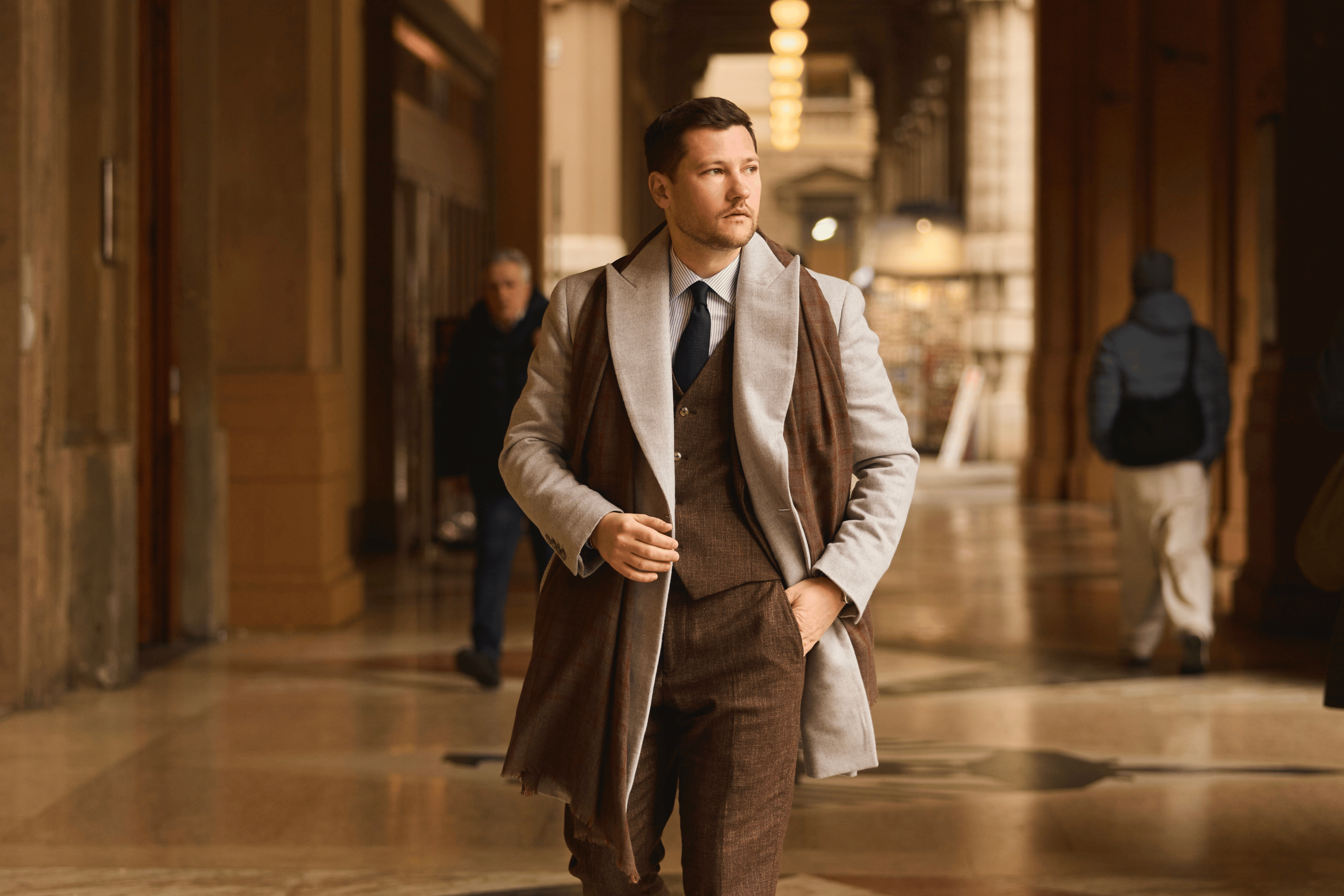
However, the three-piece suit offers numerous advantages. It is both more formal and particularly versatile, provided the jacket is properly proportioned.
A well-fitted jacket should cover the waistband of the pants and extend very slightly beyond the jacket button. If it sits too high, there is a risk of obscuring the tie too much. Conversely, it should not allow too much of the shirt placket to show.
Likewise, it is best to avoid low-waisted pants with a three-piece suit. The purpose of the vest is not to expose the belt or the shirt—which would disrupt the continuity of the silhouette—but to create a harmonious transition between the jacket and the pants.
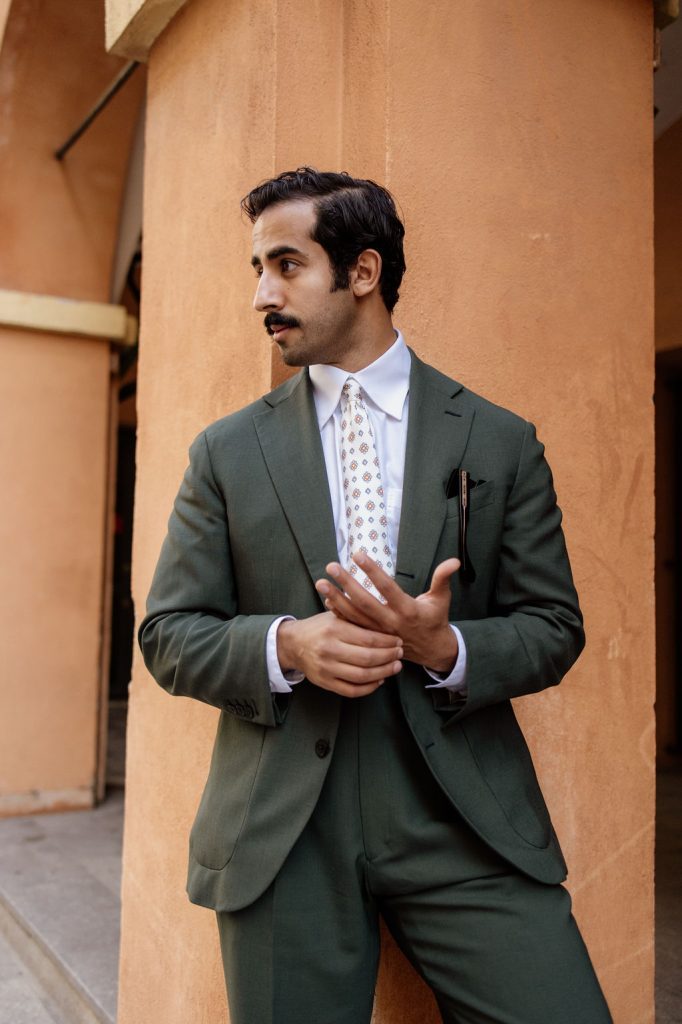
The rule is that the top button of a vest should always remain unbuttoned.
A widely told anecdote attributes this custom to an English monarch who, unable to fasten the top button of his vest due to his corpulence, decided to leave it open. It is said that his court later adopted this practice out of imitation and courtesy.
Whether or not this is historically accurate, this custom has now become a true rule of men’s elegance.
There is also a similar story regarding the top button of a jacket.
Nineteenth-century aristocrats used to leave the top button undone after meals for greater comfort. This practice gradually became a dress code. That is why, today, the top button of a two-button jacket is never fastened.
And beyond tradition, there is a purely aesthetic reason: the jacket simply looks more elegant that way.
Today, the three-button suit has virtually disappeared, despite a brief resurgence in the 1990s. Its design is less in line with the expectations and habits of the contemporary gentleman, who seeks, above all, greater comfort and practicality—such as being able to use the pockets easily.
The two-button suit has therefore become the market standard. Regardless of price range, it is now found in the vast majority of collections.
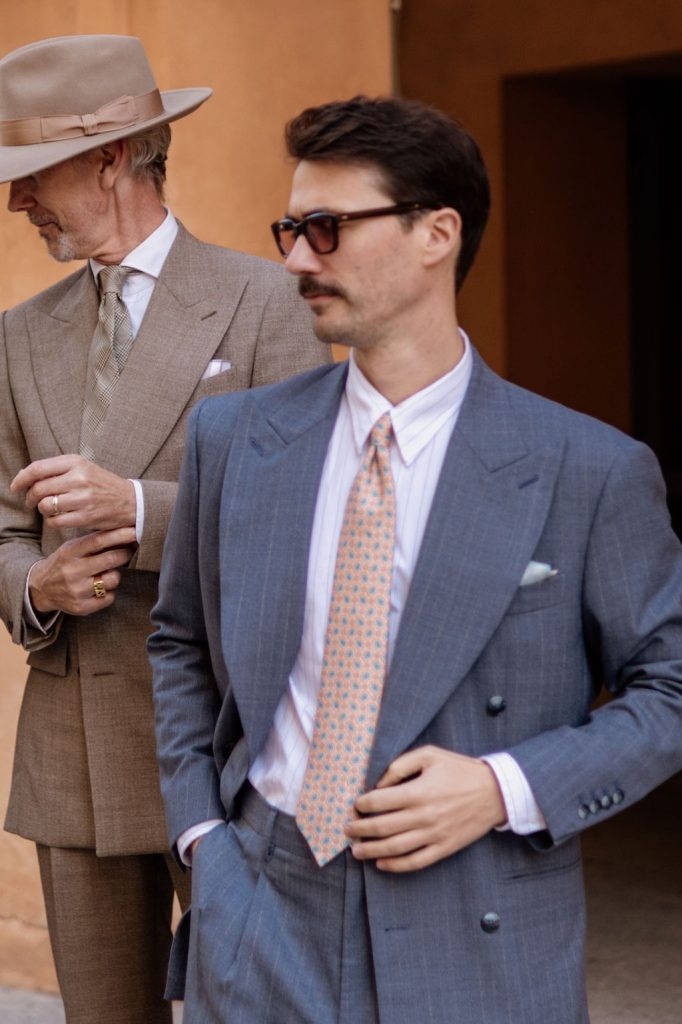
The double-breasted suit, on the other hand, remains a niche item. It is more commonly found among bespoke tailors and at the most prestigious fashion houses, where its distinctive character and unique tailoring continue to be fully appreciated.
And that is precisely what makes it an interesting addition to a man’s wardrobe: it’s not necessarily about wearing it every day, but about owning at least one.
Ultimately, the history of the suit shows us one thing: far from being something immutable, it has constantly evolved alongside our lifestyles, our customs, and our relationship with elegance. And while certain norms may seem immutable today, they are often the result of a long history, shaped by customs, practical limitations, and, at times… some charming anecdotes.
Article written by @yves_dron