


05/11/2026
2026 Ballon d’Or: a look back at the outfits that made the evening
On Monday 26 October 2026, the London Palladium was graced by a host of international football stars. Setting aside the…

When you start building up your suit wardrobe, one question often comes up: where do you start? Should you stick to the tried-and-tested options, or give in to the temptation of that striped or checked suit that’s been catching your eye for a while?
After all, we’ve all imagined ourselves wearing a double-breasted striped suit, in the style of Kingsman or Colin Firth. Ultimately, plain grey or navy blue suits, however essential they may be, can end up lacking personality when they make up the bulk of our wardrobe.
But between the desire to think outside the box and the fear of going over the top, there’s sometimes a step we’re reluctant to take. It’s hard to imagine wearing certain pieces to the office; we dread the stares and, above all, we wonder whether we’ll really feel comfortable.
The solution? Build your wardrobe gradually. The idea isn’t to accumulate lots of suits, but to develop a cohesive wardrobe in which each new piece
naturally finds its place. From simple plain colours to bolder patterns, here are the steps we recommend to help you gain confidence and, one day, wear that suit you’ve been longing for.
It’s one of the great classics of the men’s wardrobe. Versatile and easy to style, it fits naturally into most professional settings.
To start with, opt for a medium grey or charcoal grey – understated enough to be worn regularly, yet nuanced enough to suit a variety of outfits. When it comes to fabric, good-quality wool, in a weight suited to your climate and intended use, is an excellent starting point. A Super 110 or Super 120, in particular, offers a good balance between fineness and everyday wear.
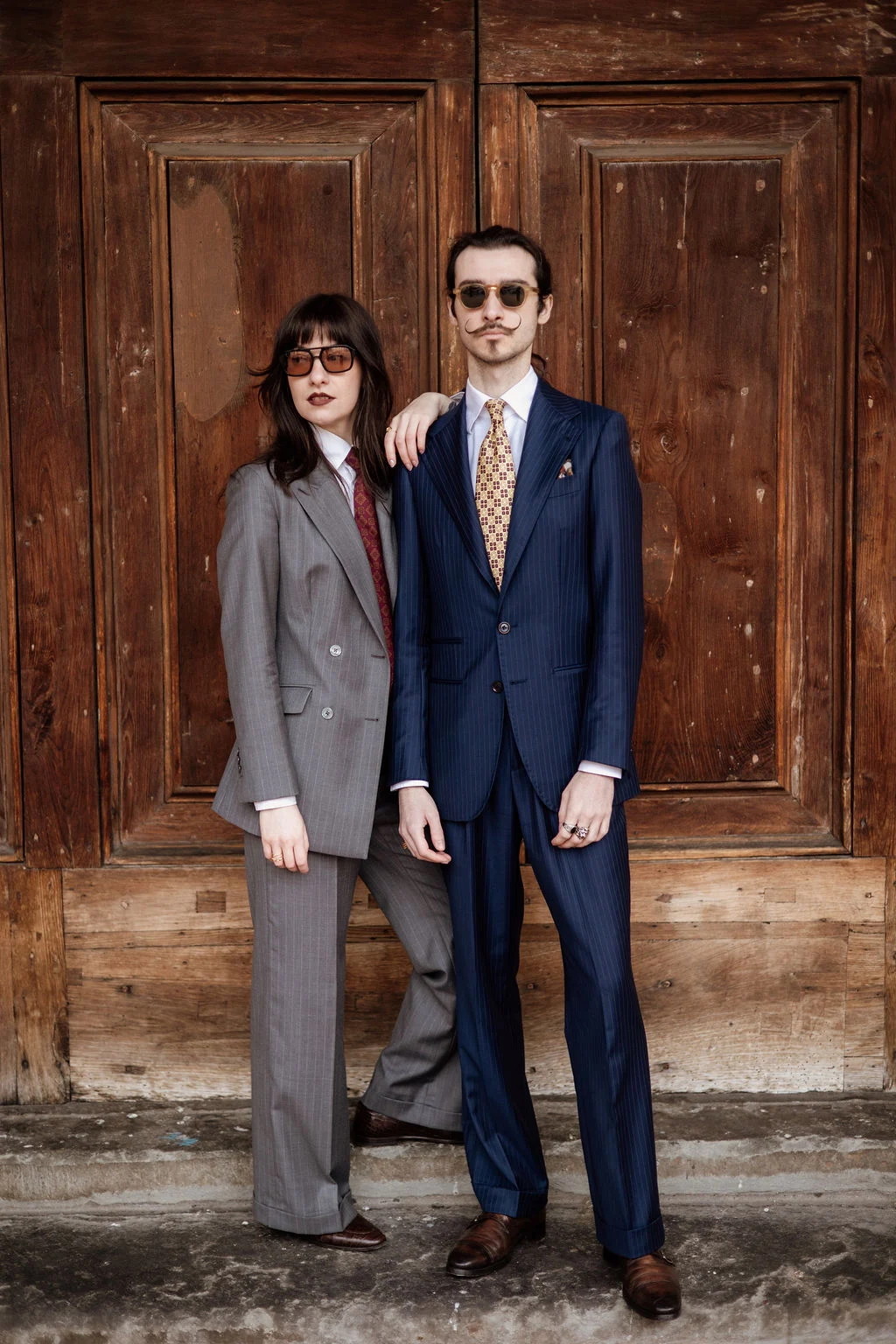
If you had to choose just one more, it would probably be this one. The navy blue suit is undoubtedly one of the most versatile items in a man’s wardrobe. It’s just as suitable for a day at work as it is for a business meeting or a more formal occasion.
To move away from the traditional combed wool fabric, we recommend you try Fresco. This open-weave wool, recognisable by its dry feel and excellent drape, offers superb breathability as well as good resistance to creasing. Depending on its weight, it is a particularly good choice for mid-season wear, especially in spring and early autumn.
The jacket can also be worn on its own with grey trousers or beige chinos, provided the fabric and construction are suitable.

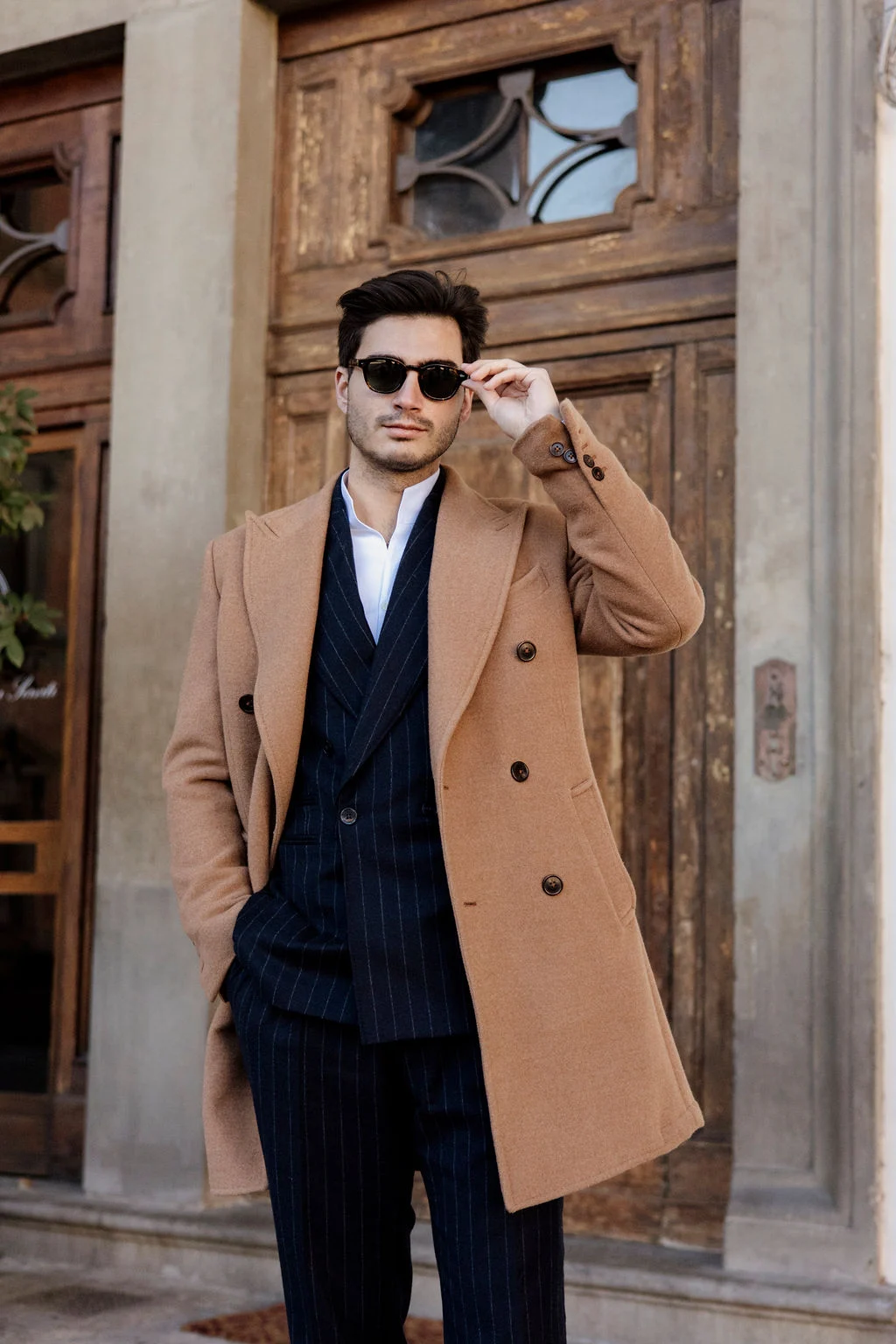
Once you’ve acquired your first two suits, stripes are an excellent way to add a bit of character to your wardrobe.
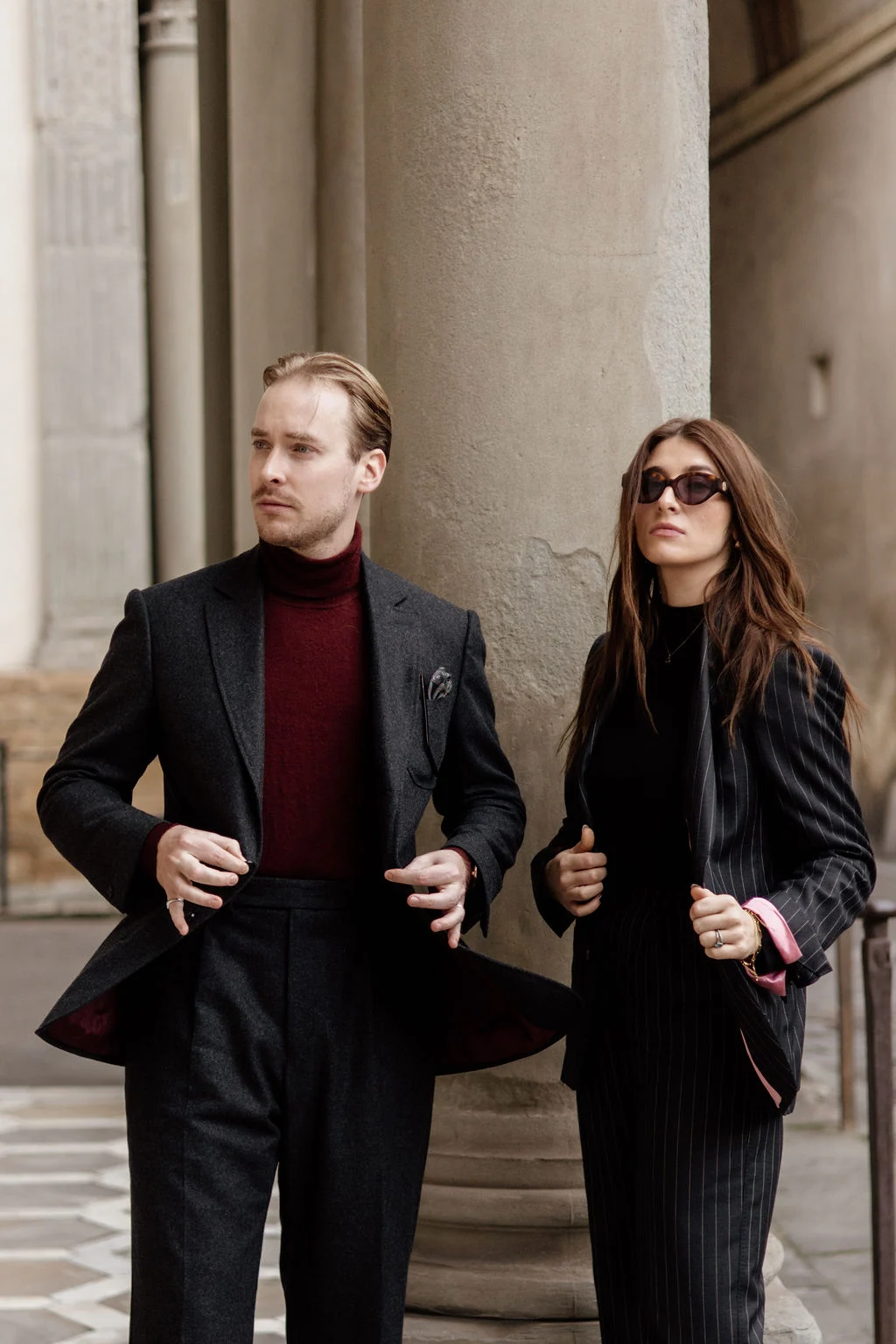
For an autumn and winter look, we particularly recommend chalk stripes on flannel. Set against a grey or navy blue background, they instantly lend a sartorial touch to your look. Wider and more subtle than a classic tennis stripe, they offer an elegant contrast that looks particularly striking on wool flannel.
Do, however, ensure you get the proportions right: the width of the stripes and the spacing between them must suit your build. The aim is to strike a balance between personality and elegance, without letting the pattern overpower the overall look.
The Prince of Wales check is another excellent choice when building your wardrobe. More eye-catching than a subtle stripe, this pattern adds texture and real depth to a suit.
For your first purchase, however, we recommend opting for a subtle Glen Check, in tone-on-tone shades of grey or blue. The pattern remains visible up close, but blends more seamlessly into the suit’s overall colour from a distance. It’s an excellent way to introduce checks into your wardrobe without disrupting your usual style.
It’s also a style worth considering once you’re already comfortable with your first few suits and wish to explore the possibilities of tailoring further. You’ve probably started building up a collection of ties and pocket squares: accessories that will allow you to play with patterns and combinations, whilst maintaining a certain harmony.
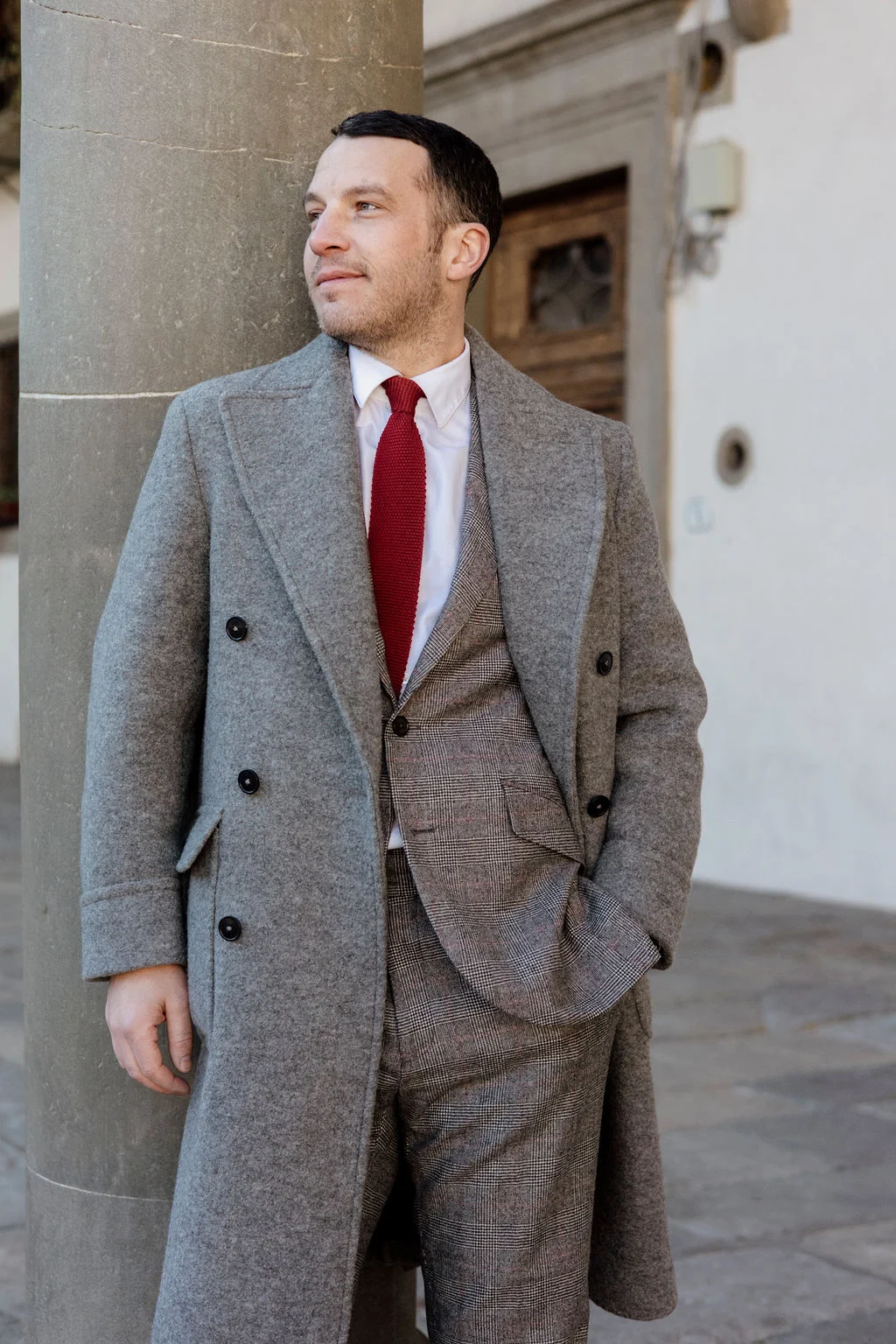
Here is a garment that deserves a place of its own in any man’s wardrobe: the double-breasted suit.
With its distinctive buttoning, generous lapels and more structured construction, it has a distinctive presence. It immediately evokes a certain tradition of tailoring, from the silhouettes of Don Draper to the iconic suits of British elegance.
Contrary to popular belief, you don’t need an extensive wardrobe to wear one. A plain navy blue double-breasted suit is even an excellent alternative to the classic single-breasted suit.
The jacket can also be worn on its own with grey trousers or beige or khaki chinos to create particularly elegant mismatched outfits.
Start with a plain style, in navy or grey, before moving on to striped or checked versions. These could become the most distinctive pieces in your wardrobe.
Once you’ve established the basics of your professional wardrobe, it’s worth considering the occasions that call for more formal attire.
The black suit is suitable for some of these occasions. It can be worn to a ceremony, an evening event or more solemn occasions, such as funerals.
Opt for a simple cut and an elegant fabric. For evening events, however, the black tuxedo with its satin lapels remains the gold standard. For a wedding or a reception, midnight blue can also be a particularly elegant alternative.
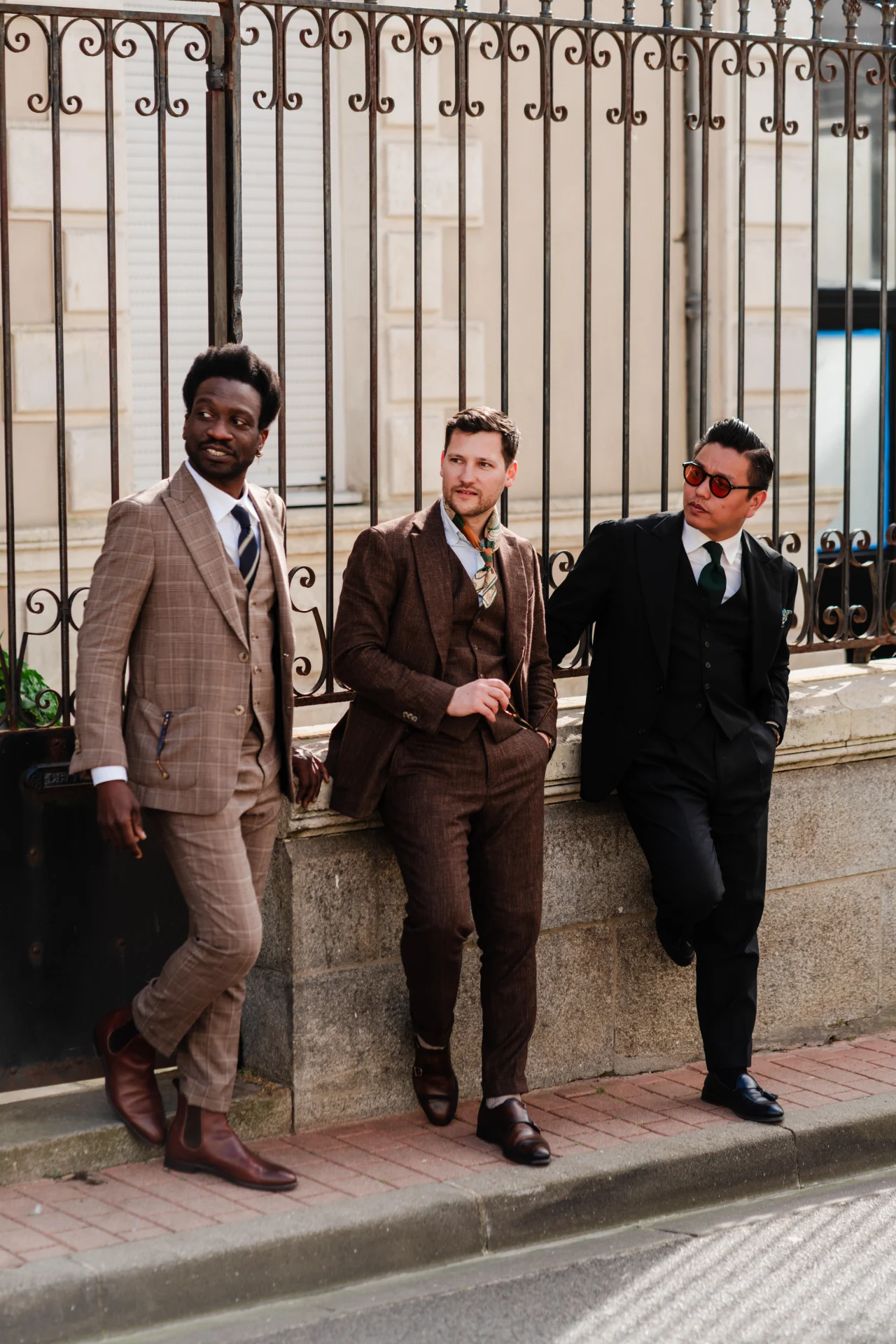
Once you’ve bought your first two suits – a plain grey and a plain navy blue – what you do next depends above all on your personal taste and your everyday life. There’s no need to follow this order to the letter: if you’re more drawn to stripes than Prince of Wales checks, start with those. The key is to build a wardrobe that reflects your personality and that you’ll enjoy wearing.
If there’s one piece of advice to take away from this article, it would be this: start with subtle patterns, whose shades blend naturally into the colour of the suit. If you’re still hesitating to take the plunge, the caviar pattern makes for an excellent transition. This micro-pattern adds texture and depth to the fabric without radically altering the overall look of the outfit.
Finally, don’t forget that a suit with a strong character isn’t just for a select few. You simply need to learn how to make it your own, find the right combinations and, above all, feel comfortable in it. The classics provide the foundations; the bolder pieces then allow you to fully express your personality.
Author: @yves_dron