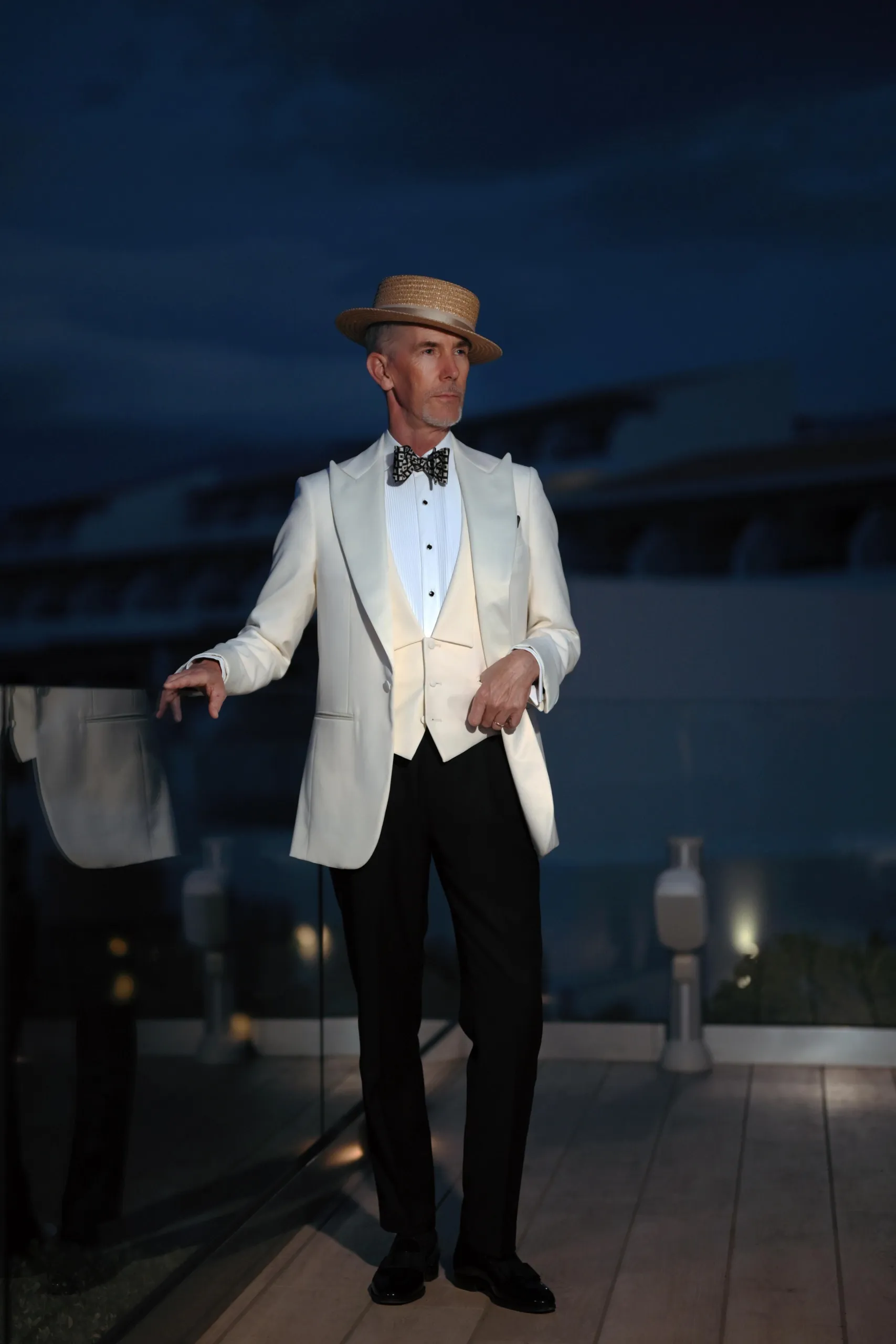
Gui bo’s three-piece tuxedo

The Interpretation of the Tuxedo by Gui Bo

First created in the 1930s as a response to the heat of summer evenings and cruises, it retains the structure of the classic tuxedo whilst breaking away from its traditional black colour. This three-piece tuxedo in Dormeuil barathéa, with its ivory jacket and waistcoat, offers a contemporary and personal take on the classic design, as seen, for example, in its generous, satin-free lapels.

Photographer: @thestoryalist

In summary,

The tuxedo is the quintessential evening wear. A more modern alternative to the tailcoat, it has established itself as a symbol of elegance and distinction.

This off-white three-piece tuxedo (jacket and waistcoat) is designed for outdoor summer evenings, gala dinners under warm lighting, and summer ceremonies where black might be too dark for the season’s warmth.

The tuxedo as a whole

The design

The jacket has a slim fit with structured shoulders, a sharp-pointed collar and a single-button fastening. The jacket and waistcoat are made from off-white Dormeuil barathéa fabric, whilst the trousers are made from the same barathéa in black. Barathéa has been the fabric of choice for tuxedos for over a century. Its tight diagonal twill weave gives it a smooth, virtually non-reflective surface, a subtle texture and a very straight drape that resists creasing even after a long evening. 

The jacket

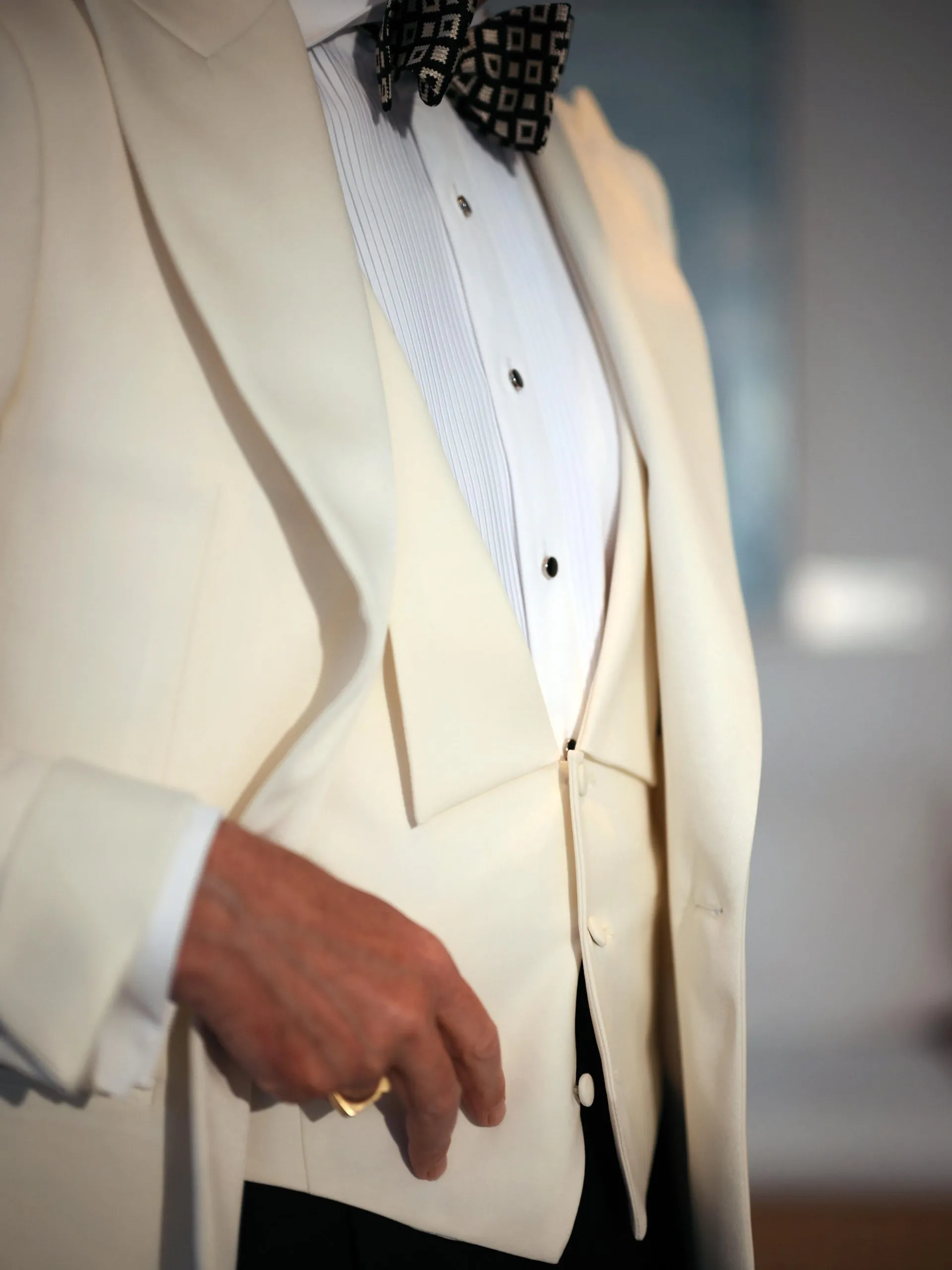
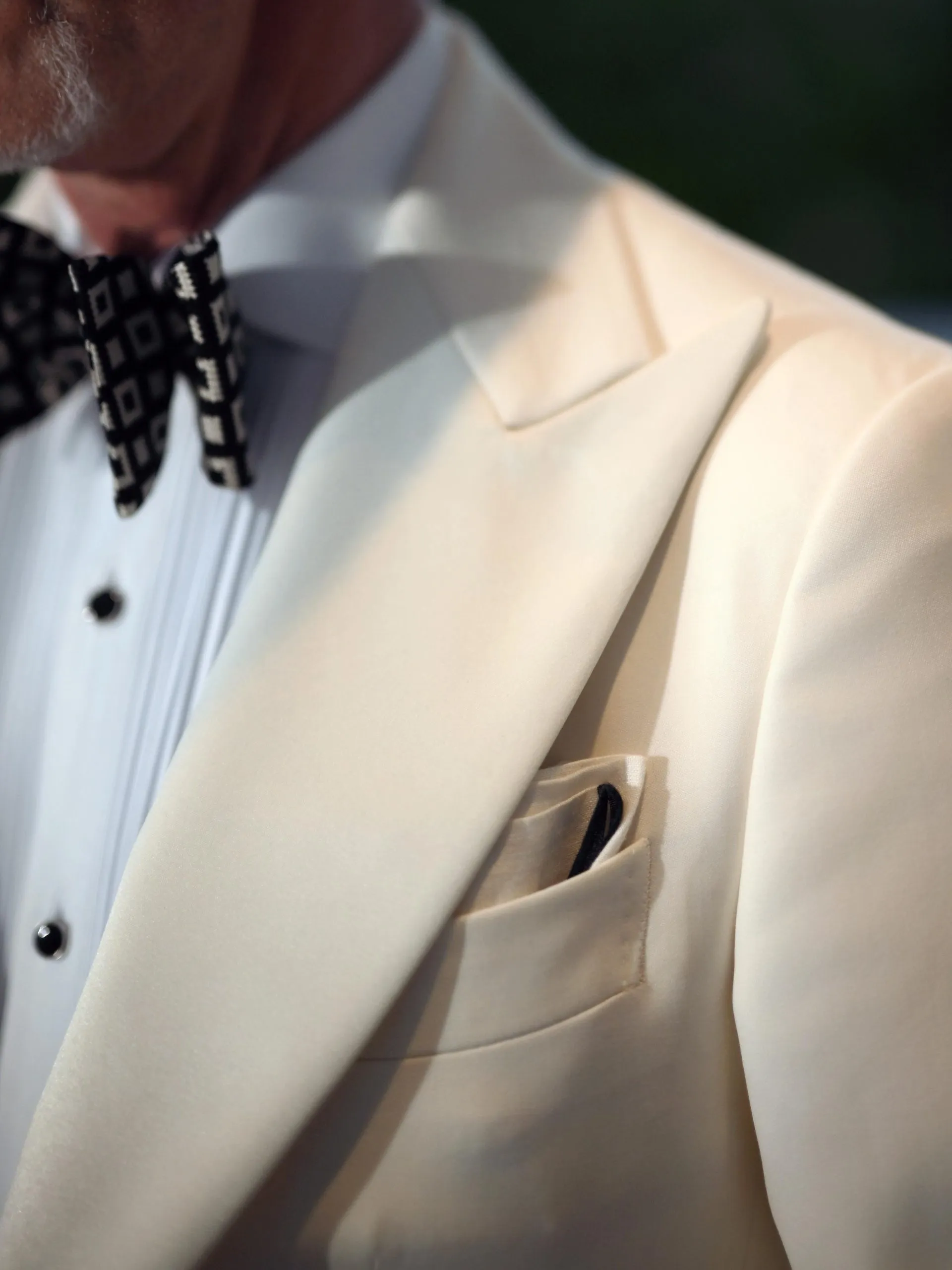
The jacket features 10.5 cm sharp-pointed lapels, a generous width that adds character to the silhouette without straying from the traditional tuxedo style. The buttons are covered in ivory satin and the pockets are straight, piped pockets without flaps – the only finish permitted on a tuxedo. The fabric is 100 per cent wool. 

The trousers

The 100 per cent wool trousers feature two outer pleats, a choice that adds volume and ease of movement without weighing down the silhouette. On these tuxedo trousers, the pleats alter the drape of the fabric and signal a sartorial approach to this garment. This freedom is consistent with the overall spirit of Guillaume’s outfit: a tuxedo that embraces both comfort and its bespoke character.

A few details,

The colour

The off-white colour is due to the fabric’s wool content. Indeed, with natural wool fabric, it is not possible to achieve a true white. This is why, in high-end tailoring, whites are always off-white. The aim is not the brilliance of pure white, but a warmer tone that complements the subdued lighting of evening events. Paired with black trousers, it creates a striking, structuring contrast; this two-tone combination of an ivory jacket and black trousers is an iconic look in the world of summer tuxedos: Fred Astaire, Cary Grant, and later generations of dandies on the Côte d’Azur or in Cannes, made it their signature look.

The waistcoat

The waistcoat is a ‘dress waistcoat’. It is a garment steeped in history. Before the cummerbund became the norm, the three-piece tuxedo with a lapelled waistcoat was the most formal version of black tie. The buttons are covered in off-white satin. 

The lapels

The lapels are made from the main ivory barathéa fabric, without satin. This choice ensures consistency in material with the jacket, creating a monochrome silhouette that is more sculptural than conventional.  
Fancy seeing more?

Take a closer look at this three-piece ivory Dormeuil barathéa tuxedo from every angle.

Whether for gala dinners or summer ceremonies, this tuxedo is the ideal choice for an elegant and confident look.

Credits,

Photographer:@thestoryalist

Complete your outfit